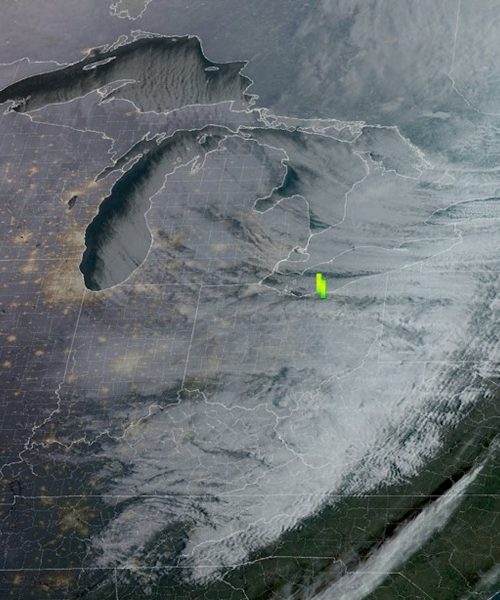
Watching the aurora borealis (in the Northern Hemisphere) or aurora australis (in the Southern Hemisphere) is unforgettable. Photographing them is on a whole other level. Capturing these ribbons of light as they move and twist across the night sky transforms even the darkest winter night into a surreal wonderland.
In 2025, the aurora provided some most intense displays of the current solar cycle. While solar maximum has now peaked, geomagnetic activity has remained exceptionally strong.
The eighth edition of The Northern Lights Photographer of the Year brings together 25 most extraordinary aurora images captured around the world over the past year. Twelve of this year’s stunning winners are sampled below. (Click to expand images to full screen.)
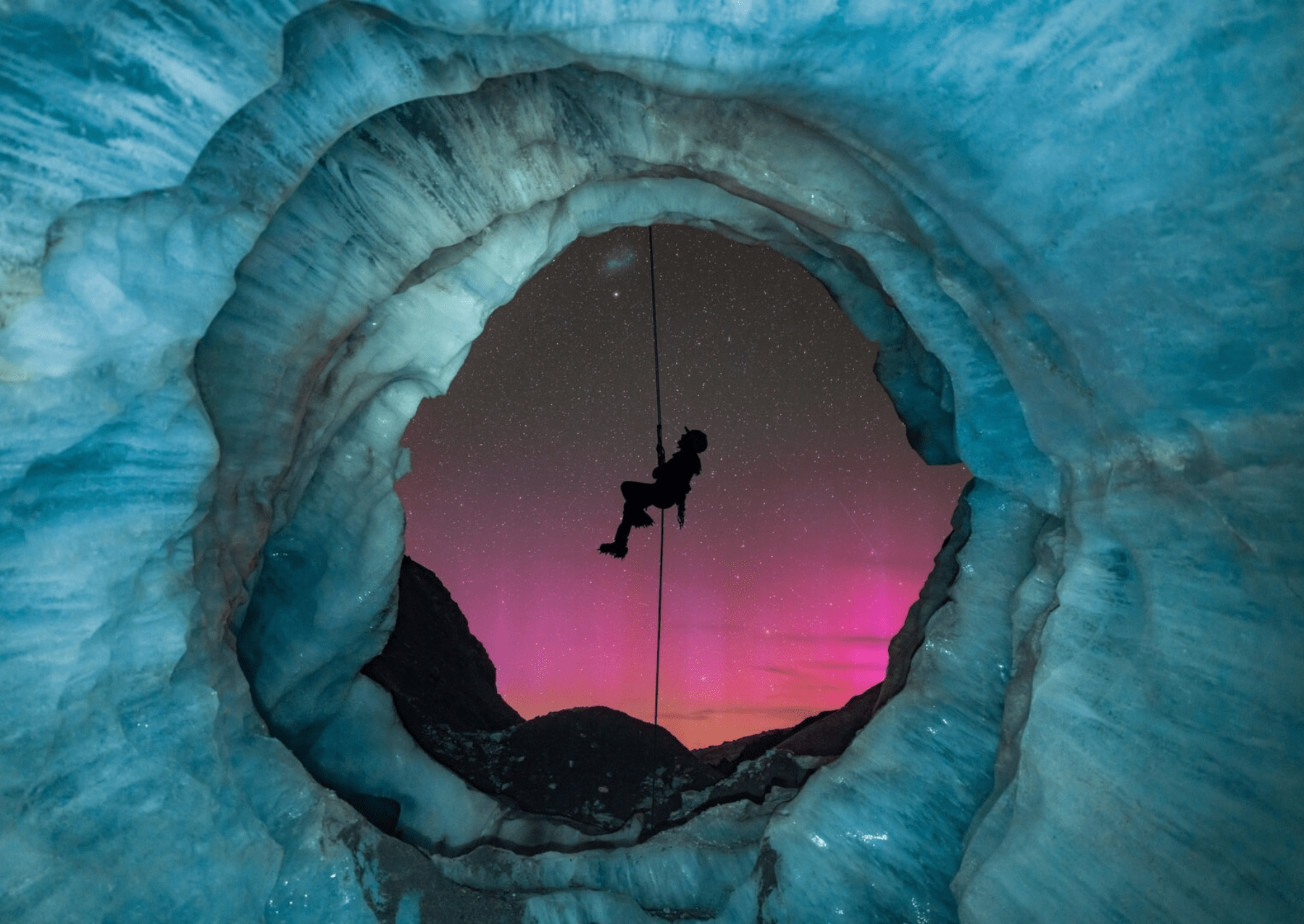
“I originally found this ice cave, called a moulin, 8 months prior to setting up this shot in Aoraki/Mount Cook National Park. Glaciers are a very dynamic environment, so I kept going back to monitor the changes of this moulin over the 8-month period. As the opening of the cave formed, I envisioned setting up a night shot with my friend abseiling down the mouth of the cave with New Zealand’s amazing starry sky in the background.One magical night, everything finally came together! To my surprise, the Aurora Australis also lit up the sky. I managed to capture my friend’s silhouette perfectly placed in the center of the cave’s opening, and I love how the pinky tones of the aurora contrast with the icy colors of the cave. This dream shot ended up coming out better than I had originally envisioned, and I had a great night with my friends exploring the glacier!” Image: Tori Harp.
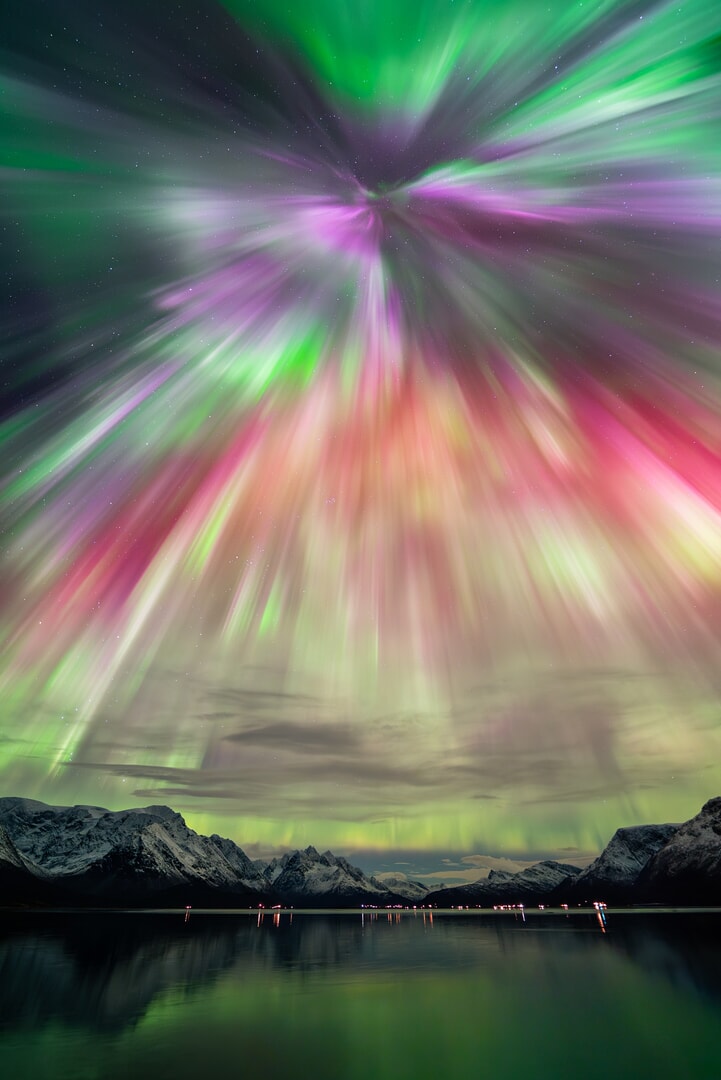
“For me, Northern Lights photography is always about capturing unique moments; snapshots of this rare natural phenomenon. This is why I never use very long exposures. I took this photograph on October 29th, 2025, near Tromso, Norway. A few seconds before capturing this scene, there was a “wall” containing colored layers – green and red – not uncommon during a substorm. But it suddenly became unstructured when a dancing corona appeared above it. I’ve seen plenty of aurora shows in my life, but nothing like this. And it happened in a location I’ve always wanted to photograph. It’s all about perseverance! Standing beneath this auroral corona, I felt like I was standing in a natural cathedral with vibrant layers of color and light radiating toward me. I was super lucky to capture this shot, and my best advice is to be patient and do your research…the hard work pays off!” Image: Vincent Beudez.

“Riisitunturi National Park, Finland. This night was truly unforgettable. Capturing the famous frozen trees of Riisitunturi beneath the Northern Lights had been a dream for years. In March 2025, we set out to make it happen, but the weather challenged us with thick clouds all week. On our final night, we hiked into the park, hoping for a glimpse of the sky. The wind was biting, and we took shelter among the frozen trees, waiting in silence. After hours of nothing, we finally gave up and began the hike back to our cabin. Then, just as we were about to call it a night, a break appeared in the clouds. We grabbed our gear and hurried back up the Riisitunturi Hill. The moment we reached the top, the sky burst into vivid shades of green. It was an explosion of light and wonder. This night was the experience of a lifetime: the dream shot I had longed for and a moment that words can hardly describe. Photographing the Northern Lights demands patience and persistence, but when they finally appear, time stands still, and nature reminds you just how amazing our world can be.” Image: Nikki Born.
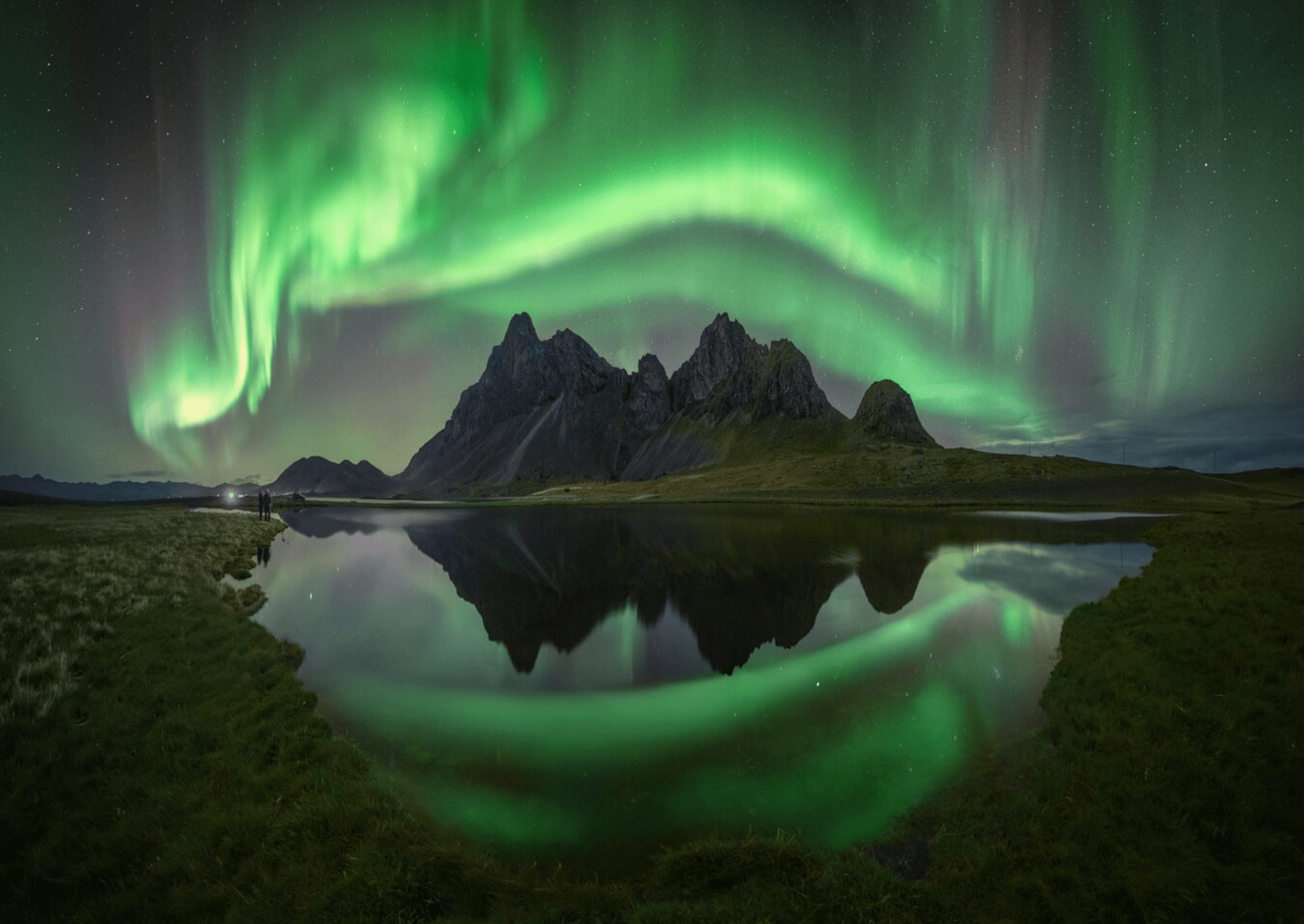
“Without a doubt, one of the most challenging aurora panoramas I’ve ever taken was this one at one of Iceland’s most spectacular locations. Capturing a panorama with reflections and auroras that move so quickly is quite difficult. It was the photograph of my dreams, so I arrived in the afternoon to prepare the angles and options for the night. Clear skies and very little wind looked perfect for capturing reflections in the different pools. Auroras were already visible in the sky during the blue hour, so I quickly headed to the spot where I had planned the composition. The wind shifted, making it difficult to capture the reflections, but the moment the sky exploded, the wind stopped, and for a few brief moments, I achieved my dream photograph. It was a great joy to witness and capture such a moment.” Image: Pablo Ruiz.
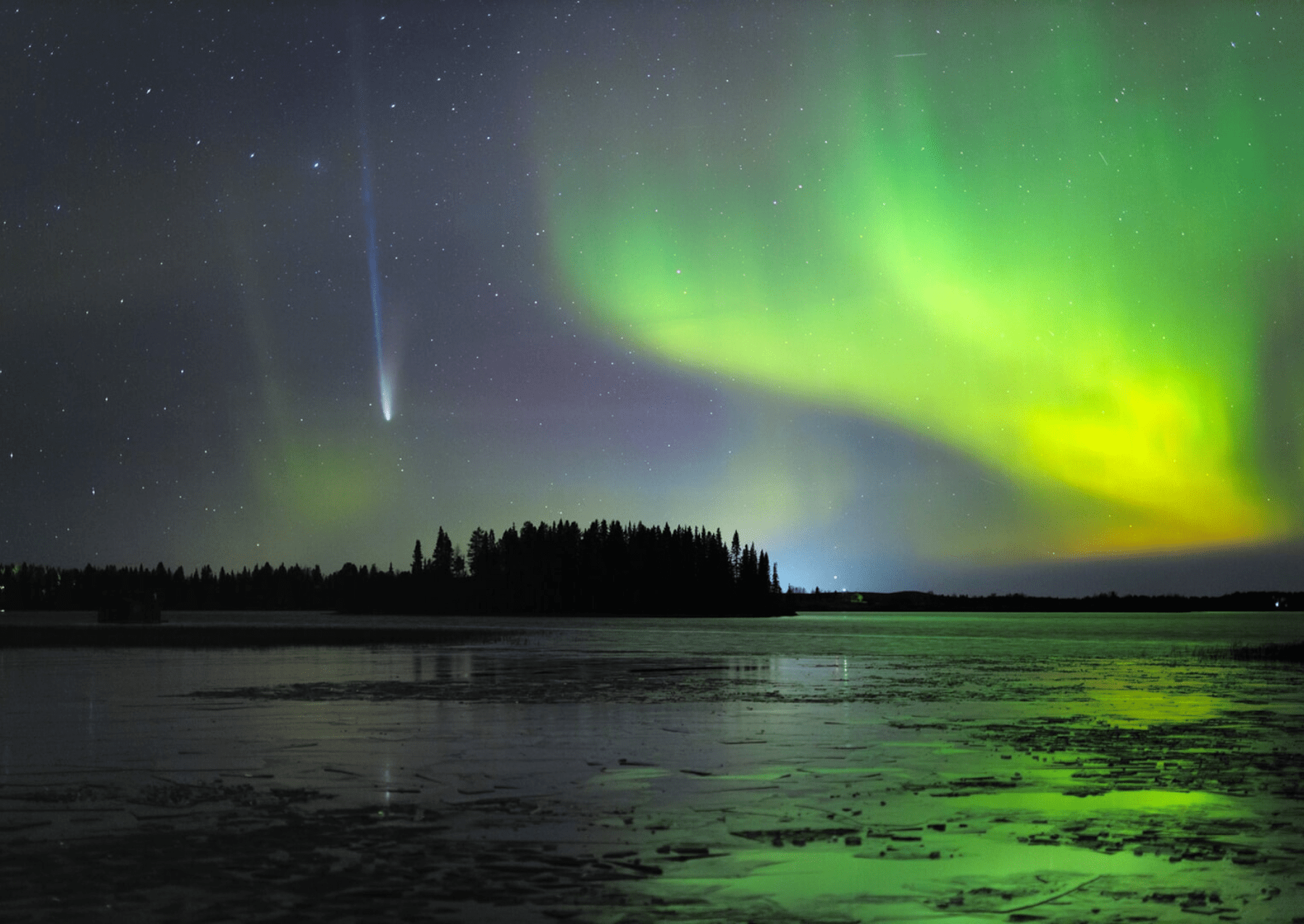
“The night of 24 October, 2025, was incredible. I had just moved to Sweden, where I organized an astrophotography workshop. We headed to Skaulo, where we found an incredible viewpoint over Suotojärvi Lake. This night coincided with the C/2025 A6 (Lemmon) Comet, which was only discovered back in January 2025. The comet was so bright that we could see it with our naked eyes, even when it was very low on the horizon. Fortunately, I had my camera with me! I photographed the comet darting through the sky beside the bright Aurora Borealis. Capturing two stunning natural phenomena in one shot was an exhilarating experience. The comet and the aurora appeared to be in a sort of dance, giving us an amazing show that I’ll remember forever.” Image: Petr Horálek.
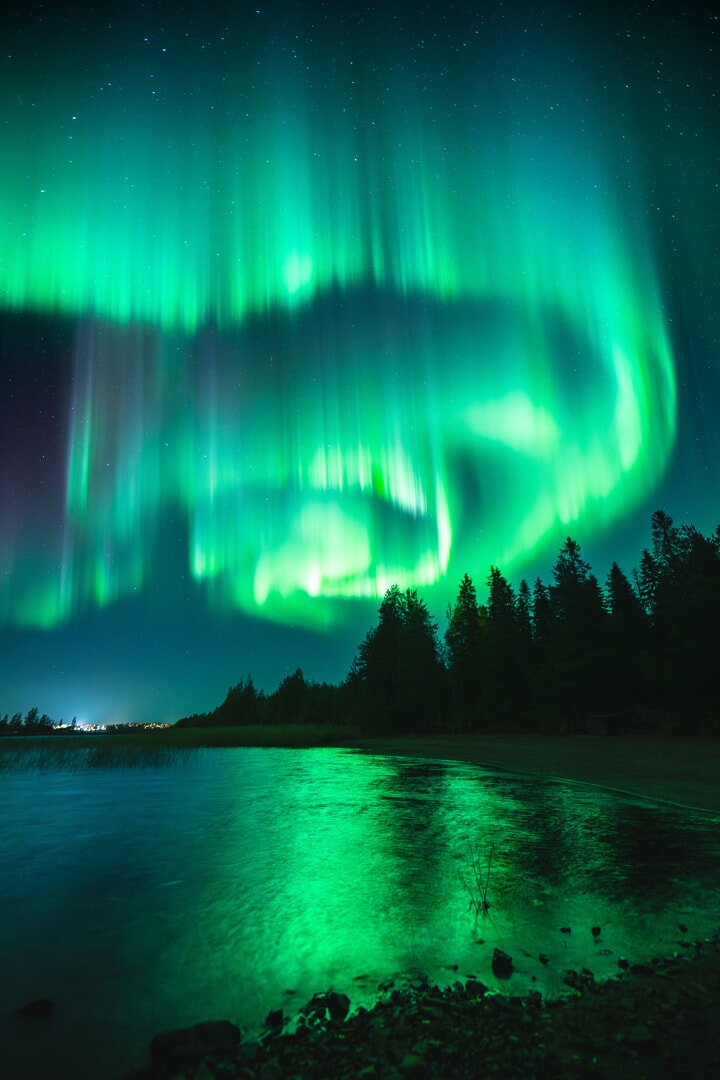
“I step outside and take a look at the sky above my house. It’s time. I feel the adrenaline rush in as I gather my gear and put on more warm clothes. Just a quick drive to the lake nearby and I’m all set up for the night! During active nights, I always follow the real-time solar wind data to predict what’s yet to come. On this night, there were no significant CMEs as far as I remember. And I was perfectly fine with that, as this could be the night when I finally get the shot I’ve dreamed about for a long time. In my mind, I imagine the Northern Lights creating a clear, bright green spiral to the northern sky, just above the trees, so the foreground would fit perfectly into the frame. I couldn’t believe my eyes when the auroral arc started taking the exact shape I had only dreamed about for so long! Perfect reminder of how beautiful these subtle auroras can be!” Image: Mari Jääskeläinen.
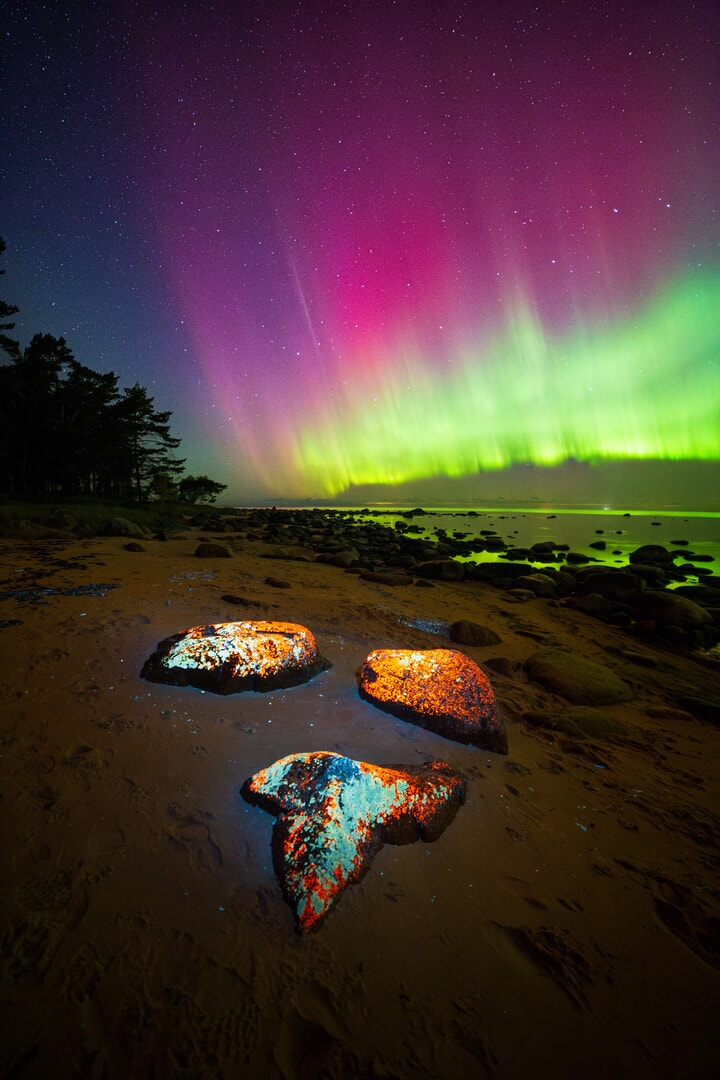
“I shot this image on a quiet, rocky beach as a strong aurora storm rolled in from the north. At first, it was just a low green arc, but it quickly erupted into vertical curtains of lime and rare magenta. To connect the sky with the foreground, I illuminated the shoreline rocks with a strong 365 nm UV light torch, which made the minerals pop and added the surreal glow you see in the image. The challenge was balancing everything—an exposure of about 5 seconds to keep the aurora structure sharp and managing the UV spill so it didn’t look artificial. What keeps me coming back to Northern Lights photography is this mix of science and magic: you study forecasts and KP indices, but the real reward is when the sky does something unexpected, and you’re prepared to capture it in a single, colorful frame.” Image: Andres Papp.
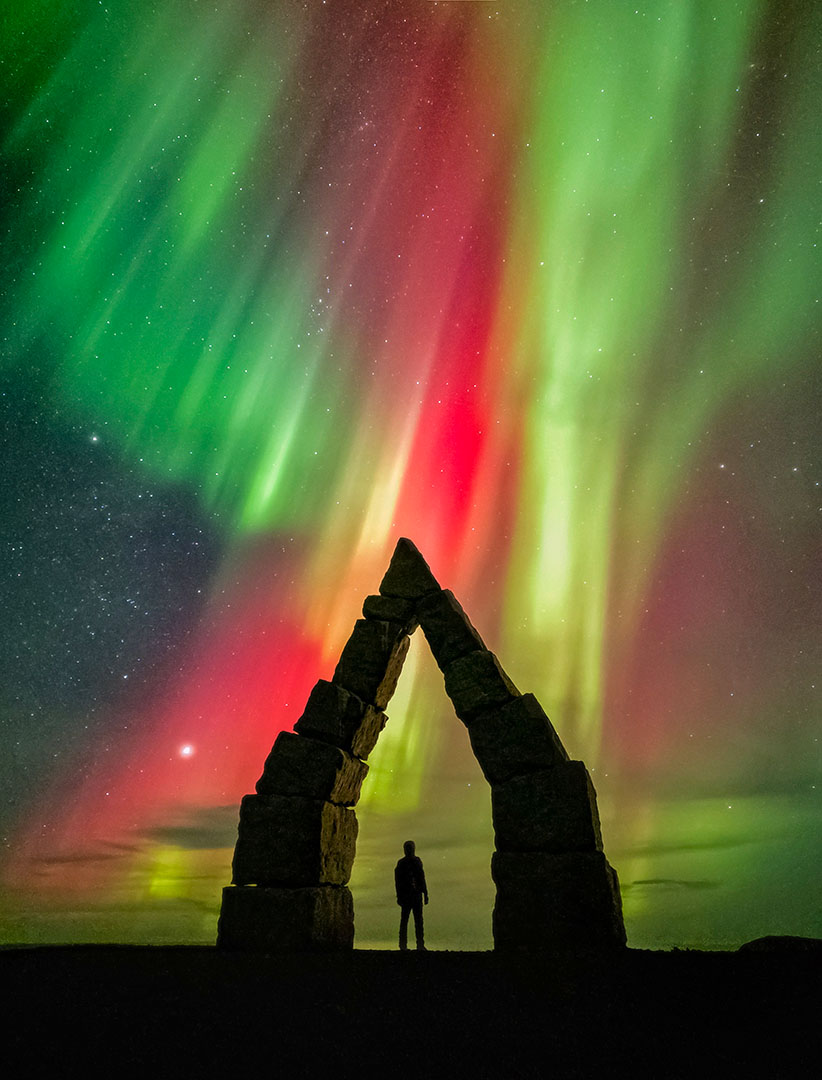
“These days, a mobile phone isn’t just a communication device – it’s a window to the universe! In addition to accessing the online encyclopedia of humanity, today, it can also introduce us to the world beyond our planet! This photo is a single-shot capture from Iceland, taken with my Samsung mobile phone in Pro mode, with an 8-second long exposure. It shows the “Arctic Henge” (Heimskautsgerðið) in Raufarhöfn, Iceland. The triangular stone gateway is a prime spot for viewing the aurora, and I photographed it just as a colorful display of red and green lit up the sky. I stood underneath the arch to provide a sense of just how small I felt in this moment…all this natural beauty unfurling before my eyes was an experience I’ll treasure forever.” Image: Sadeq Hayati.
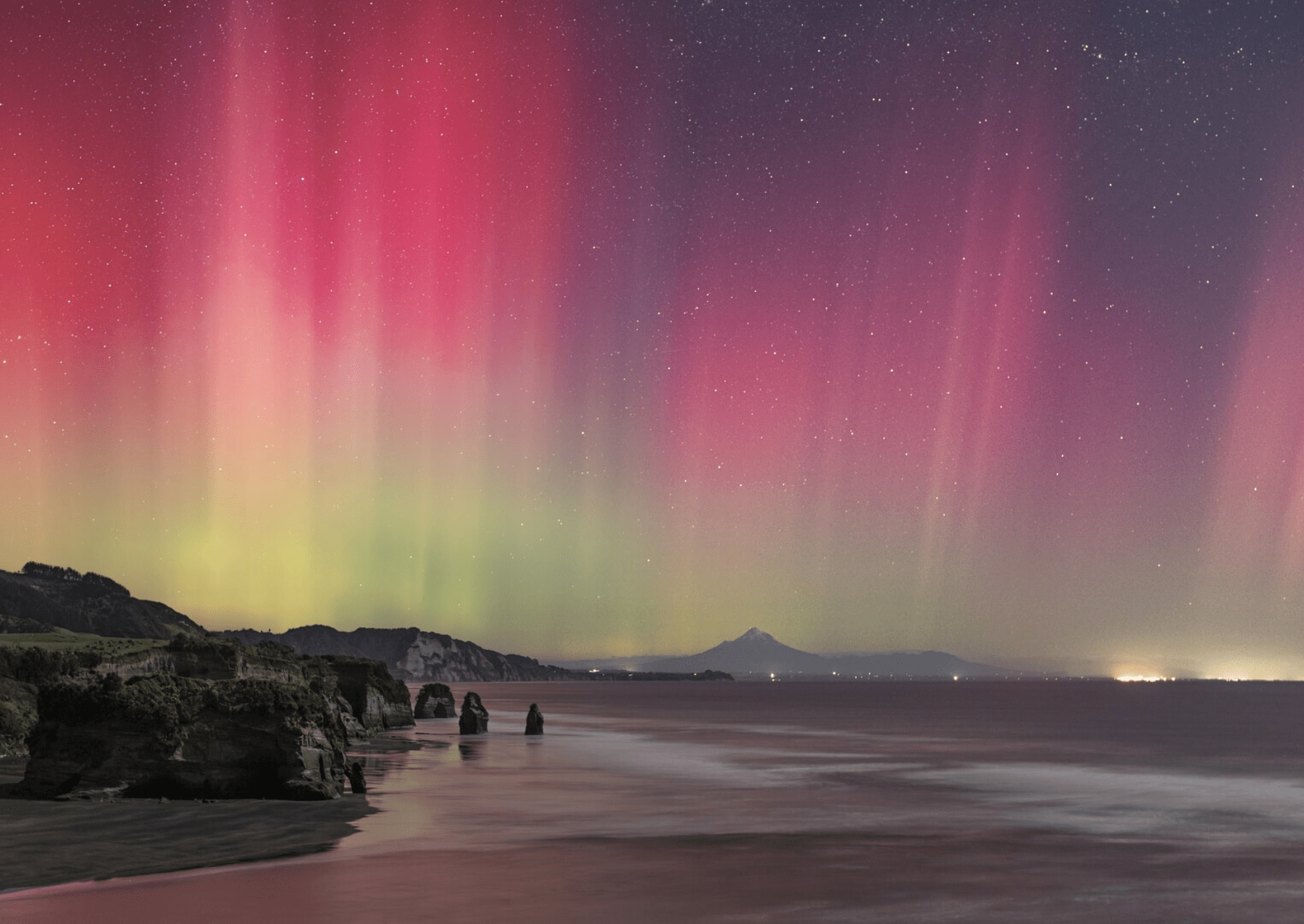
“A rare aurora event lit the west coast of New Zealand’s North Island in vivid curtains of pink and green. In the foreground, the rock formations known as the Three Sisters stand as guardians of the shoreline, while the sacred Taranaki Maunga rises in the distance. Within Te ao Māori (the Māori worldview), such natural features are not just landscapes but ancestral presences, carrying the role of guardianship. Beneath the aurora, earth, sky, and ancestry converge in a moment both fleeting and timeless. After capturing my first aurora during the May 2024 storm, I was hooked. Travelling several hours from my home to this special location, I hoped the forecasts would be correct. Even with a near–full moon, the powerful display shone across the sky. I could see the beams dancing overhead — a truly spectacular sight.” Image: Daniel Mickleson.
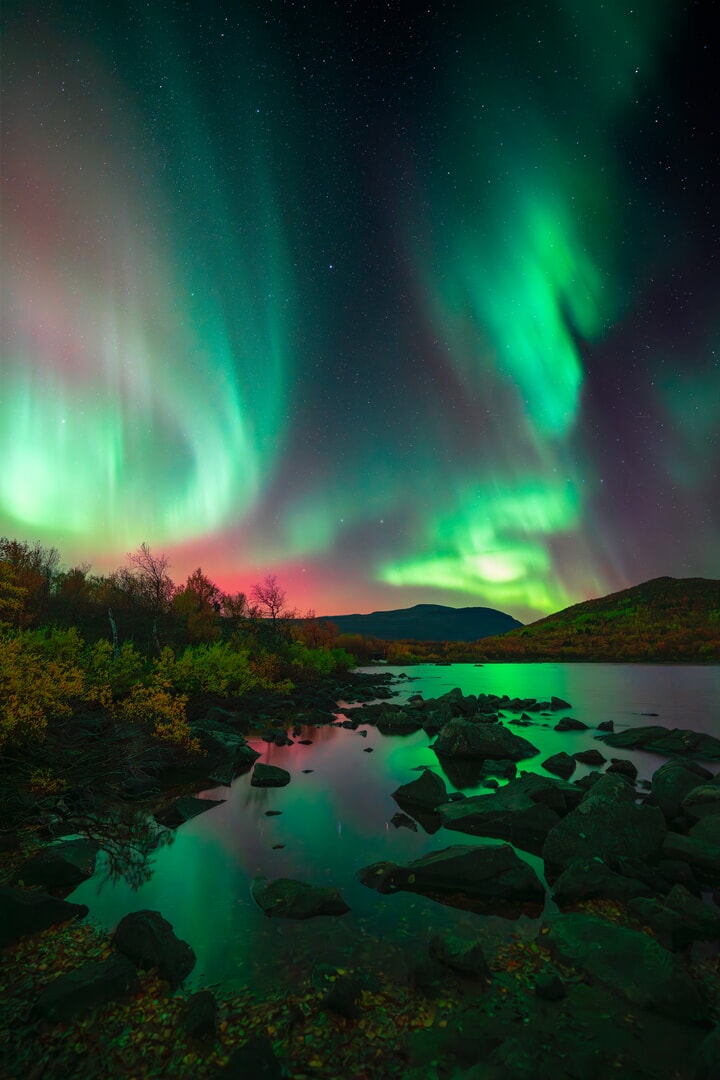
“The 1st of October 2025. That night, at the very moment I stepped outside my home, I somehow knew it was going to be a great one. The solar activity was looking really good, and I kept thinking that I had to find some open water to catch those reflections. Soon, the lakes would be completely frozen and covered in snow, so this felt like the right time to look for reflections before winter settled in. I drove to a little bay of Lake Torneträsk in Abisko, a place I like because it’s usually quiet and protected from the wind. A few moments after arriving, the Northern Lights started to move slowly across the sky, and then suddenly they began to dance. Red tones rose on the southern horizon while the lake remained perfectly still, reflecting every single thing that was happening above me.” Image: Jesús Garrido.

“During my trip to Iceland, I traveled from the south to the north. The landscapes changed, and snow covered almost everything. Godafoss is a must-see in northern Iceland, literally meaning “the waterfall of the gods.” In the year 1000, Iceland adopted Christianity, and the idols of the old pagan gods were thrown into the falls. This waterfall is one of the most impressive in the country, making us feel incredibly small in its presence. We visited the site in the afternoon while there was still daylight to scout the area. Despite promising aurora forecasts, the day was cloudy, and after sunset, the clouds didn’t seem to clear. We took a short break in the van to warm up and wait. Once night fell, a miracle happened: the sky completely cleared up. We moved as close as possible to the falls, set up our cameras, and almost instantly, the auroras appeared. The colors were different that night, shifting from pink to purple to green.” Image: Martin Giraud.
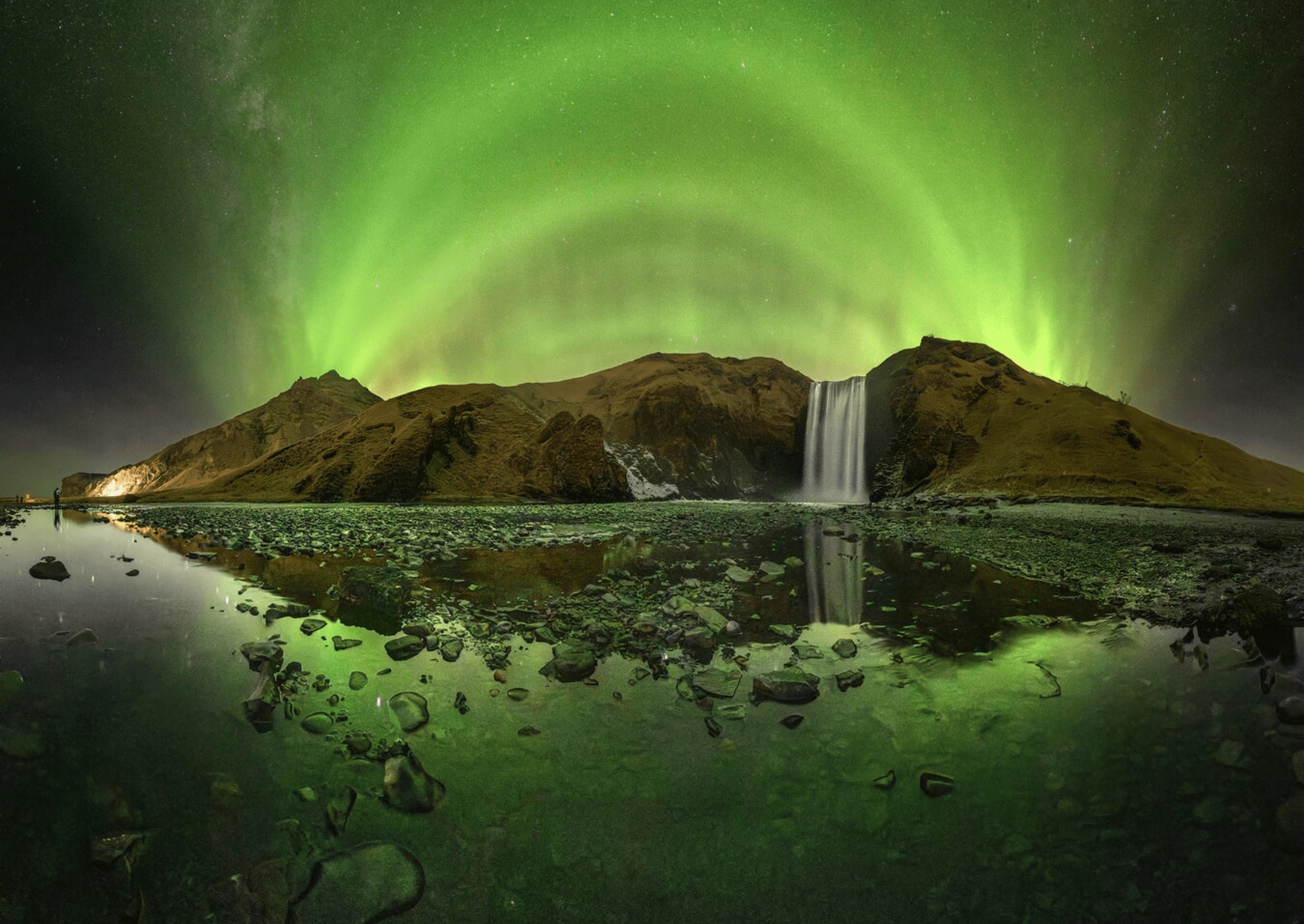
“On nights like this, Iceland feels otherworldly. The aurora unfolded in perfectly layered arcs, painting the entire valley with shades of emerald while the waterfall echoed under the glow. The reflection on the frozen shallows completed the symmetry, making the whole landscape look like a portal to another world. It’s impossible to stand here and not feel the power of nature. When you’re standing before this waterfall, your first impulse is to focus on it, using focal lengths around 20mm. However, when I observed the scene, I noticed that the Aurora Borealis was forming arcs aligned with the mountains surrounding the waterfall, so I opted to take a panoramic image using a 12mm fisheye lens to reduce the number of images needed to cover the entire scene. I also chose to take advantage of the stream formed by the waterfall to capture the reflection of the landscape and the sky, thus adding more complexity to the composition. Wearing waterproof boots, or at least what should have been, I entered the watercourse, set up my tripod very low, and took the sequence of images to assemble the panorama later.” Image: Victor Lima.