NASA’s Chandra X-Ray Observatory is considered one of the agency’s greatest achievements, but it’s not necessarily as recognizable as siblings like the James Webb and Hubble Space Telescopes. However, since 1999, the powerful spacecraft has peered deep into the cosmos to provide astronomers with never-before-seen glimpses of the Milky Way galaxy. As the observatory nears its 27th anniversary, NASA is highlighting its Chandra Source Catalog (CSC), an absolutely massive archive of visualization data collected over the years.
The most recent CSC update adds more than 400,000 unique compact and extended X-ray sources, as well over 1.3 million individual X-ray light detections collected through 2021. The latest examples from CSC include an image the Galactic Center, the area surrounding the supermassive black hole called Sagittarius A* that anchors our Milky Way galaxy home. The image encompasses around 60 light-years of space, which NASA describes as a “veritable pinprick” in the night sky. Despite its comparatively small size, the final result required combining 86 separate images totaling over 3 million seconds of observation time. Within this, Chandra detected more than 3,300 individual X-ray sources.
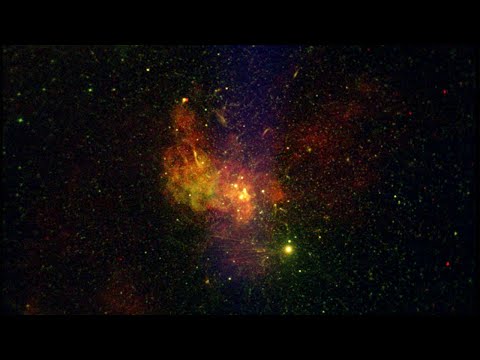
Tour: NASA’s Chandra Releases Deep Cut From Catalog of Cosmic Recordings
While the observatory’s information is indispensable for other ground and space telescopes to study new areas of the galaxy, much of the raw data is essentially invisible to the human eye. Similar to previous projects, NASA used “sonification” techniques to convert observations into ethereal audio clips to better illustrate their grandeur. To compliment the view of Sagittarius A*, NASA also provided a sonification of 22 years of space sounds. Repeat observations are given different notes, resulting in a cosmic choir of tones showcasing the vastness of Chandra’s capabilities. If that weren’t enough, the audio clip is also layered onto a map of the Milky Way. Over nearly two-and-a-half minutes, viewers can watch as each X-ray detection is pinpointed within the galaxy, with larger circles representing locations with more frequent observations.
Chandra’s initial mission was only scheduled to last five years, but has continued to surprise astronomers by outperforming their wildest expectations. Despite a period of funding uncertainty in 2024, it appears that the observatory will continue shedding light on the galaxy for years to come.

2025 PopSci Best of What’s New