We have some news you’re gonna want to sit down for—but you probably shouldn’t: Your hamstrings are, in all likelihood, an anatomical disaster for a number of possible reasons, not least of which being excessive time spent seated on them.
“The hamstrings are three muscles located on the back of your thigh, and they’re responsible for bending your knee and extending your hip,” says Marissa Cummo, PT, DPT, assistant director of physical therapy at NYC Health + Hospitals Bellevue. “When you’re sitting, your legs are usually bent, and that shortens the hamstrings.”
Spend enough time seated and your hamstrings will get used to that shortened state, making them tighter and less flexible, with repercussions for your back, your mobility and your risk of injury.
Fortunately, there’s a fairly obvious solution: hamstring stretches. Done correctly—and regularly—they can prevent pain and injury, aid athletic performance and make soap drops a cinch. We asked Dr. Cummo to share the most effective hamstring stretches. But first…
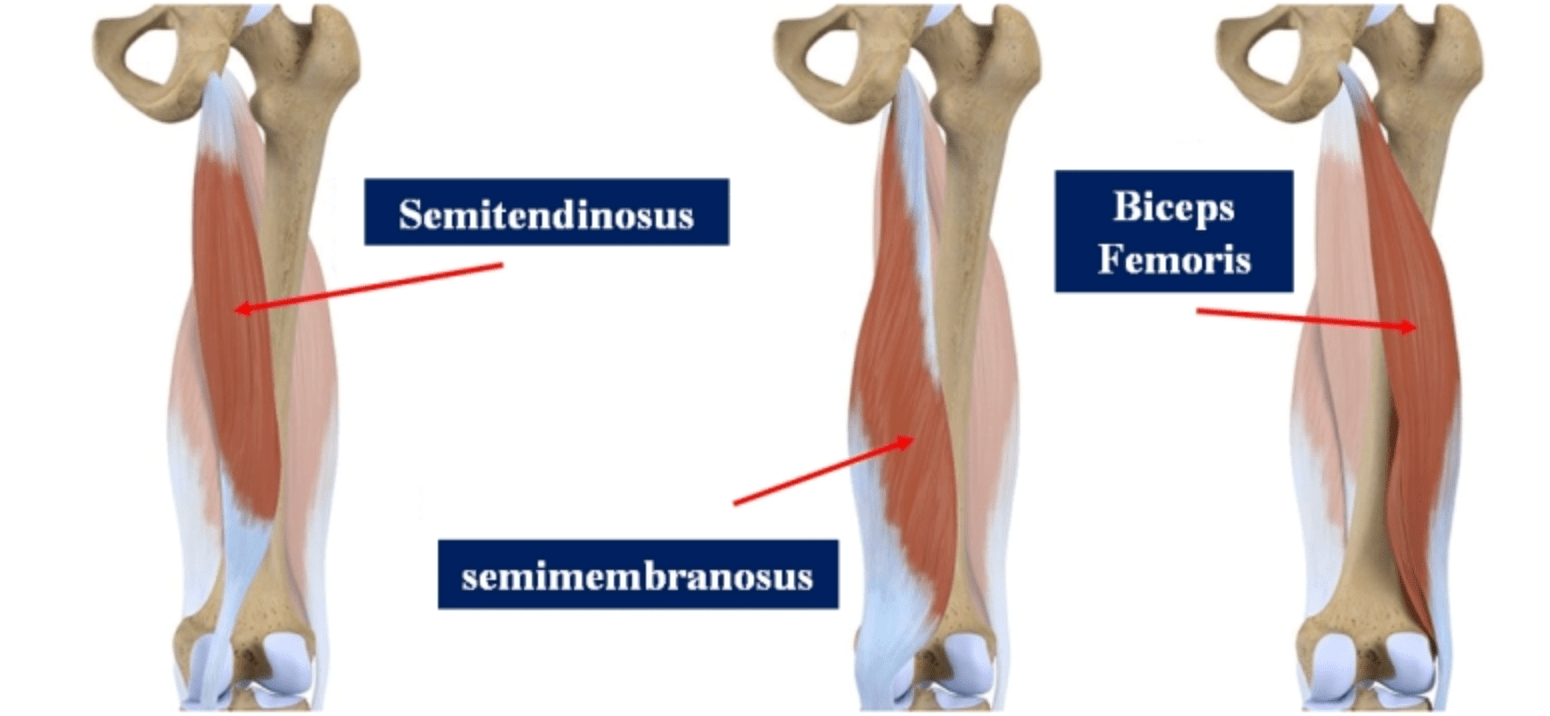
Image: B Bordoni, PhD via NIH
Primary causes of hamstring tightness
The culprits in canning your hams range from not using them enough to using them too much.
Inactivity
Inertia is the most common cause of hampered hamstrings. You might feel accomplished after a day at the office, but if you work a desk job, your lower body may scarcely register a difference between that and a Star Trek marathon.
As Dr. Cummo noted in the intro, sitting places your hamstrings and the soft tissues surrounding them in a shortened position. Too much of that and, over time, they can get stuck that way, stiffening up and limiting movement.
Overuse
On the other end of the activity spectrum, work your hamstrings in excess and they can constrict as a protective response to overload.
“As much as we encourage exercise and movement,” Dr. Cummo says, “if you do too much, the muscles can tighten up from overuse.”
Additionally, repetitive strain can cause muscles and connective tissues to develop adhesions—a kind of scar tissue—and become shortened, a state that can feel like tightness.
Injury
That restrictive feeling in your hammies might actually be a pulled or strained muscle.
“As a runner, it tends to happen to me,” Dr. Cummo says. “When you’re running, you’re using your hamstrings, especially when you’re sprinting or changing direction. If you have tight hamstrings to begin with and you’re not warming up first, you may get a strain from that.”
Or that tightness may be innocuous, like the tension resulting from muscle soreness due to exercise. But if you think you’ve suffered a strain or pull, you’re best advised to consult a doctor.
Other muscles
The musculoskeletal system is a byzantine network of overlapping tissues and cooperative functions. If a muscle isn’t pulling its weight, there can be downstream consequences.
“Your hamstrings work closely with your glutes,” Cummo says. “If your glutes are weak, that can trigger your hamstrings to work harder, and by working harder they could get [tight or] injured.”
Ditto for antagonist muscles like the quadriceps, which relax when your hamstrings contract.
“If your quads are really strong, then you’re not using your hamstrings as much,” Cummo says. “You need balanced strength and flexibility between your hamstrings and your quads.”
Consequences of tight hamstrings
Neglect your semitendinosus, semimembranosus and biceps femoris—collectively known as your hamstrings—and you can count on one or more of the following.
Back pain
“Oftentimes people, when they start having back pain, think, ‘I’m having back pain; something’s wrong with my back.’ But, a lot of times, it’s tight hamstrings,” Cummo says.
When your hamstrings are tight, they can pull down on your pelvis, altering its alignment.
“If it goes into a posterior pelvic tilt, you’re going to put increased pressure on your vertebrae and on your [back] muscles.” Prediction: pain!
Limited movement
Any tightness in your hamstrings is naturally going to restrict your range of motion whenever you bend your knee or straighten your hip. But since no muscle is an island, the limitations don’t stop there.
“People don’t think about walking, how you need movement in your hips and your knees,” Cummo opines. “If you have tight hamstrings, movements like walking or climbing stairs are gonna be more difficult for you.”
Risk of injury
As a result of the aforementioned pain and/or limitation, you’re likelier to make accommodations elsewhere that can result in awkward movement and, eventually, repetitive-strain injuries.
“If you can’t pick up your hip and your knee as much to do something, you may lead with your back,” Cummo says, “and hence you may have an injury in that body part because of it.”
Benefits of hamstring stretches
The rewards extend far beyond your thigh’s rear compartment.
Flexibility
Stretching promotes lengthening of the muscle, which improves its pliability and, ultimately, locomotive function.
Injury prevention
Limber, more functional hams preclude the need for neighboring muscle groups to compensate, reducing repetitive-stress risk.
Reduced back pain
Suppler hamstrings are less likely to tug on the pelvis, sparing vertebrae and their supporting muscles undue stress.
Better performance
Whether you’re working out or just working, springy hamstrings will enable you to move easier and more efficiently.
7 hamstring stretches for better flexibility
Cummo is emphatic that stretching your hamstrings can’t be just an occasional effort.
“A lot of people think this is like a once-a-week thing; it really should be a daily thing,” she says. “If you’re not stretching it regularly, it’s like a rubber band; it’s gonna go right back.”
She also has a few caveats for any stretch:
- Don’t hold your breath. Breathing through the stretch is paramount.
- You shouldn’t be straining while stretching. That means something is wrong.
- Don’t overstretch; you can actually hurt yourself. That means no bouncing.
1. Lying single-leg hamstring stretch
By keeping one leg bent, your back assumes a more neutral position, reducing strain on your spine.
- Lie on your back with your feet flat on the floor.
- Loop a towel or strap around the midsole of your right foot and, holding the ends in both hands, slowly straighten your knee and extend your right leg toward the ceiling.
- Hold for 15 to 30 seconds and return to the starting position, then repeat with the left leg.
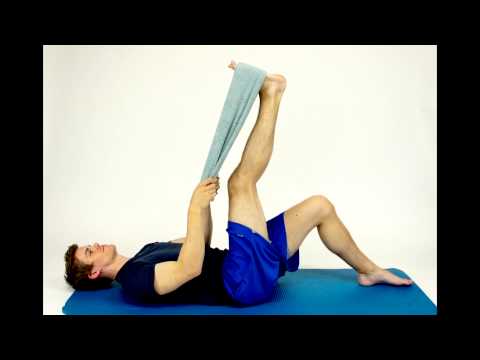
HAMSTRING STRETCH WITH TOWEL -hep2go
2. Seated forward fold
- Sit on the floor with your back upright and your legs fully extended together in front of you.
- Slowly bring your chest forward and reach your hands toward your feet as far as you can comfortably go.
- Hold for 15 to 30 seconds, remembering to breathe deeply throughout the stretch.
Modification: Place one heel against the inner thigh of the straightened leg to make the stretch easier.
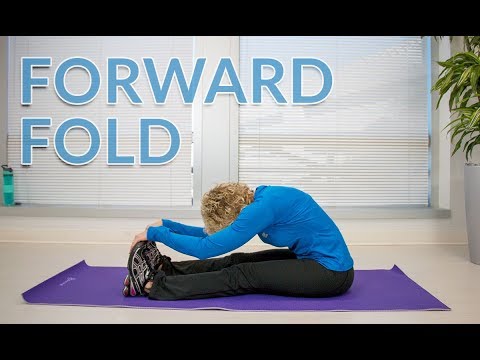
Eliminate Low Back Pain with the Forward Fold Yoga Pose
3. Kneeling hamstring stretch
Isolating one leg at a time will enable a deeper stretch.
- From a kneeling position, extend your right leg in front of you, heel down, toes up.
- Reach both of your hands down the straightened leg and lean your chest toward your right knee until you feel a stretch in the back of your right thigh.
- Hold for 15 to 30 seconds and come back up slowly, repeating on the left leg.
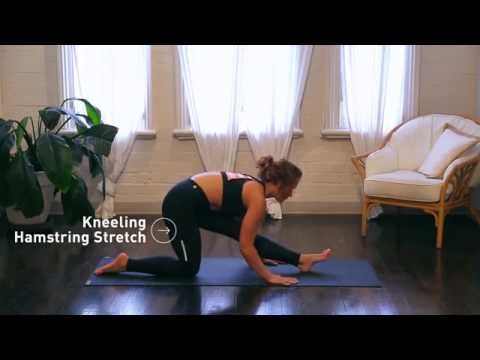
How to do a Kneeling Hamstring stretch
4. Downward-facing dog
This fundamental yoga pose not only stretches your hamstrings but also your calves and back.
- Assume a tabletop position, with your hands directly beneath your shoulders and your knees directly beneath your hips. Your toes should be tucked.
- Press your palms into the floor, lift your hips up and back toward the ceiling without rounding your back and lower your heels as close as you can to the floor.
- Hold for 15 to 30 seconds, and then slowly lower your knees to the floor, returning to the starting position.
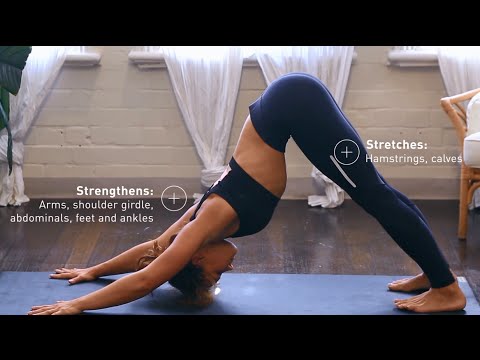
How to do a downward dog stretch
5. Standing forward fold
This version of the forward fold recruits gravity to deepen the stretch.
- Stand tall, with your feet close together and your arms at your sides.
- Keeping your legs straight, send your butt back, hinge at your hips and reach toward your toes without rounding your back until you feel a stretch in your hamstrings.
- Hold for 15 to 30 seconds and slowly return to standing.
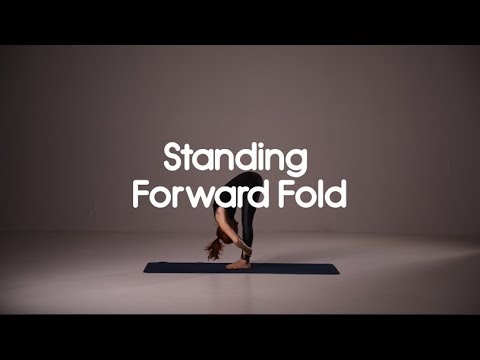
Standing Forward Fold – Stretch Hamstrings and Lower Back
6. Standing single-leg hamstring stretch
You may find this a more accessible version, while potentially enabling a deeper stretch, vis a vis its kneeling counterpart.
- Stand tall with your feet hip-width apart, and extend your right leg in front of you, planting your right heel on the floor with your toes pointing upward.
- Keeping your right leg straight and your left knee slightly bent, send your butt back, hinge at your hips and reach your hands as far down your right leg as possible without rounding your back.
- Hold for 15 to 30 seconds, slowly return to standing, switch sides and repeat.
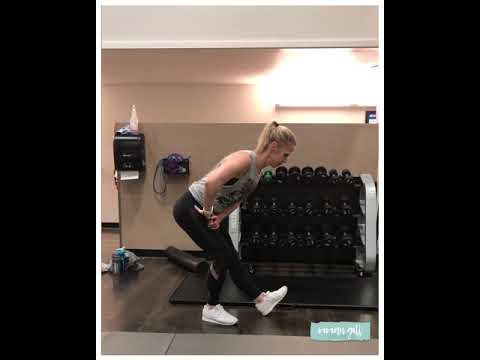
Standing Single Leg Hamstring Stretch
7. Seated hamstring chair stretch
If you’ve gotta sit, you might as well stretch while doing it. Try this while filing your next status report.
- From a seated position, bring your right leg up onto another chair or other stable object of the same height in front of you.
- Keeping your back straight, hinge at your hips and reach your hands as far as possible toward your right foot.
- Hold for 15 to 30 seconds, switch sides and repeat.
Option: Grasp a towel in both hands and loop it around the midsole of the extended leg.
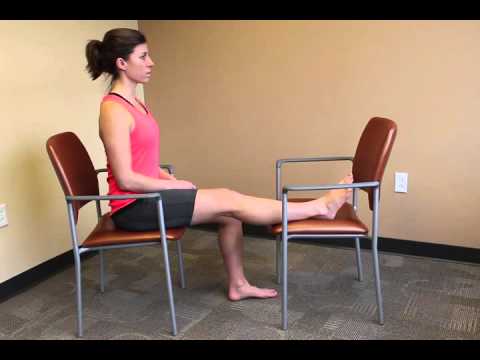
Seated Hamstring Stretch With Chair

2025 PopSci Best of What’s New