It’s February 1837, and the White House is about to bear witness to one of the greatest feeding frenzies in this nation’s proud history of competitive consumption. As night falls, the citizens of Washington, D.C., are going to make a 1,400-pound cheese disappear in a matter of minutes. And they’re going to do it at the behest of incumbent President Andrew Jackson.
The battle of the Presidential cheddars
Curiously, the cheese devoured that night was not the first colossal cheddar to grace the White House during the 19th century. In fact, competitive caseiculture unites two presidents who had very little in common otherwise: Thomas Jefferson and Andrew Jackson.
The first shots in the Big Cheese Wars of the 1800s were fired by one John Leland, the pastor of Cheshire, Massachusetts. To celebrate Jefferson’s victory in the 1801 Presidential election, Leland organized for Cheshire’s dairy farmers to pool their resources in the creation of an immense wheel of cheddar. The resultant wheel of cheese was named “The Cheshire Mammoth Cheese,” and for good reason. It weighed 1,235 pounds: about as much as an adult brown bear.
A generation later, in 1829, Jackson was elected president. He and Jefferson are often the subject of comparisons, and Jackson himself often presented himself as Jefferson’s spiritual heir. This view, it must be said, was not shared by Jefferson himself: On hearing of Jackson’s victory in the 1829 election, Jefferson reportedly remarked: “I feel much alarmed at the prospect of seeing General Jackson President. He is one of the most unfit men I know of for such a place.”
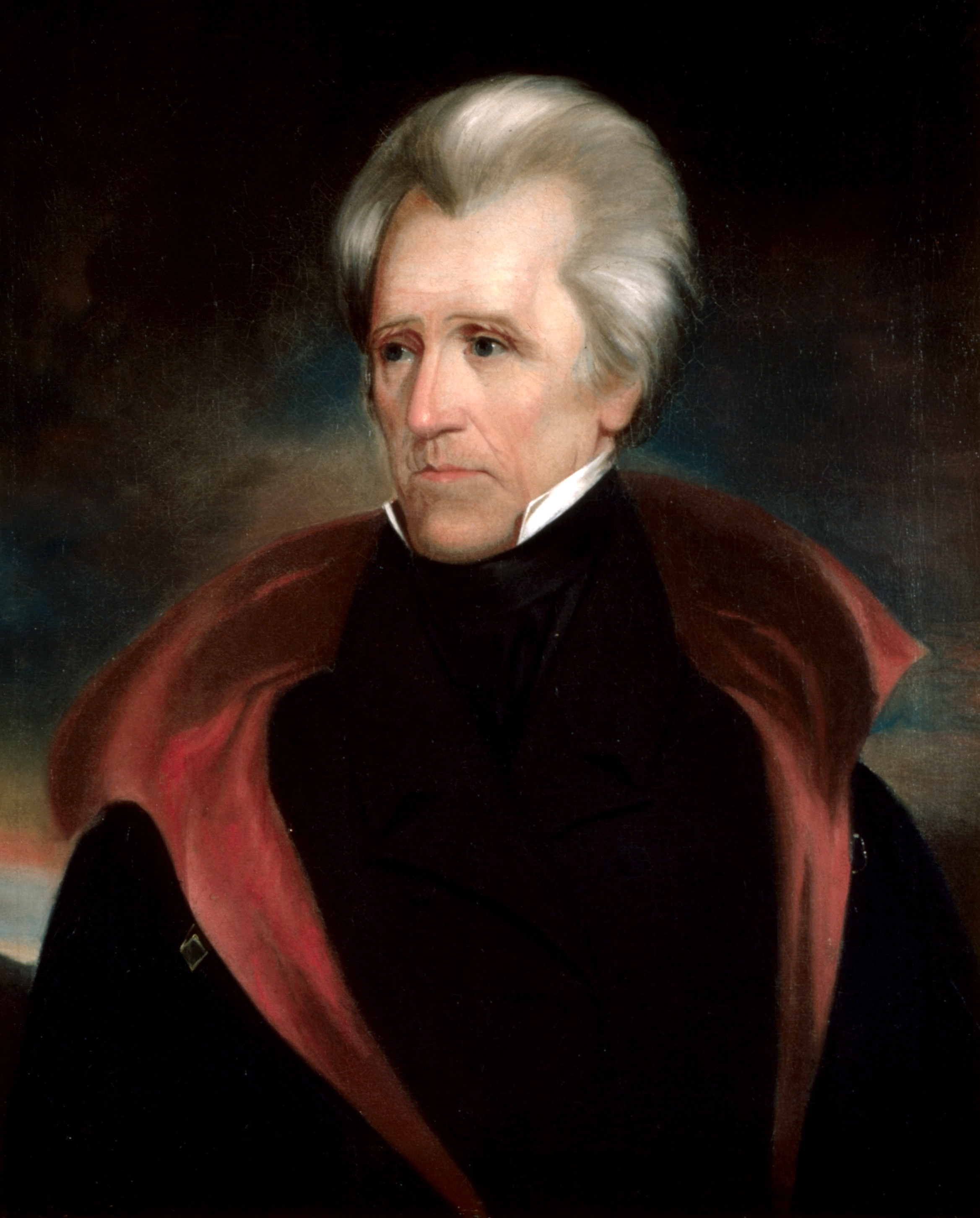
It was perhaps because of Jefferson’s disdain for Jackson that on the latter’s re-election in 1833, his supporters decided that “every honor which Jefferson had ever received should [also] be paid [to Jackson].” Amongst other things, that meant getting hold of an immense wheel of cheese—ideally, an even bigger one than Jefferson’s.
Jackson’s cheesemongers found the man for the job in Colonel Thomas S. Meecham, a veteran of the War of 1812, who had set up a dairy farm in Sandy Creek, New York, a small village just south of Kingston. Meecham got to work, and in late 1835, he unveiled a wheel of cheddar that was even larger than the Cheshire Mammoth Cheese. Exactly how much Meecham’s cheese weighed depends on which source you believe—some say 1,400 pounds, others 1,600—but either way, it was definitely bigger than Jefferson’s. Which was the point.
A big cheese, the White House, and a massive farewell party
The Jacksonian colossus traveled south on a barge, stopping at Syracuse, Albany, and New York City before arriving in Washington in early 1836. Perhaps Jackson was too busy trying to deal with the various scandals that plagued his second term, including the economic depression that became known as the Panic of 1837, or perhaps he just didn’t like cheese, but for whatever reason, Jackson seems to have been less enamored of the cheddar than his supporters. Once it arrived at the White House, the cheese just…sat there, slowly stinking up the entire building.
Jackson’s tenure in Washington was characterized by, amongst other things, his fondness for throwing parties. The White House’s East Room was completed in 1829, the year he took office, and hosted many a festive evening over the following decade. So as Jackson’s second term drew to a close in 1837, it seemed only fitting to mark the occasion with one final party—a party that also, as it happened, provided a neat answer to the question of what to do with the immense hunk of cheese that had been hanging around in his lobby for the last year.
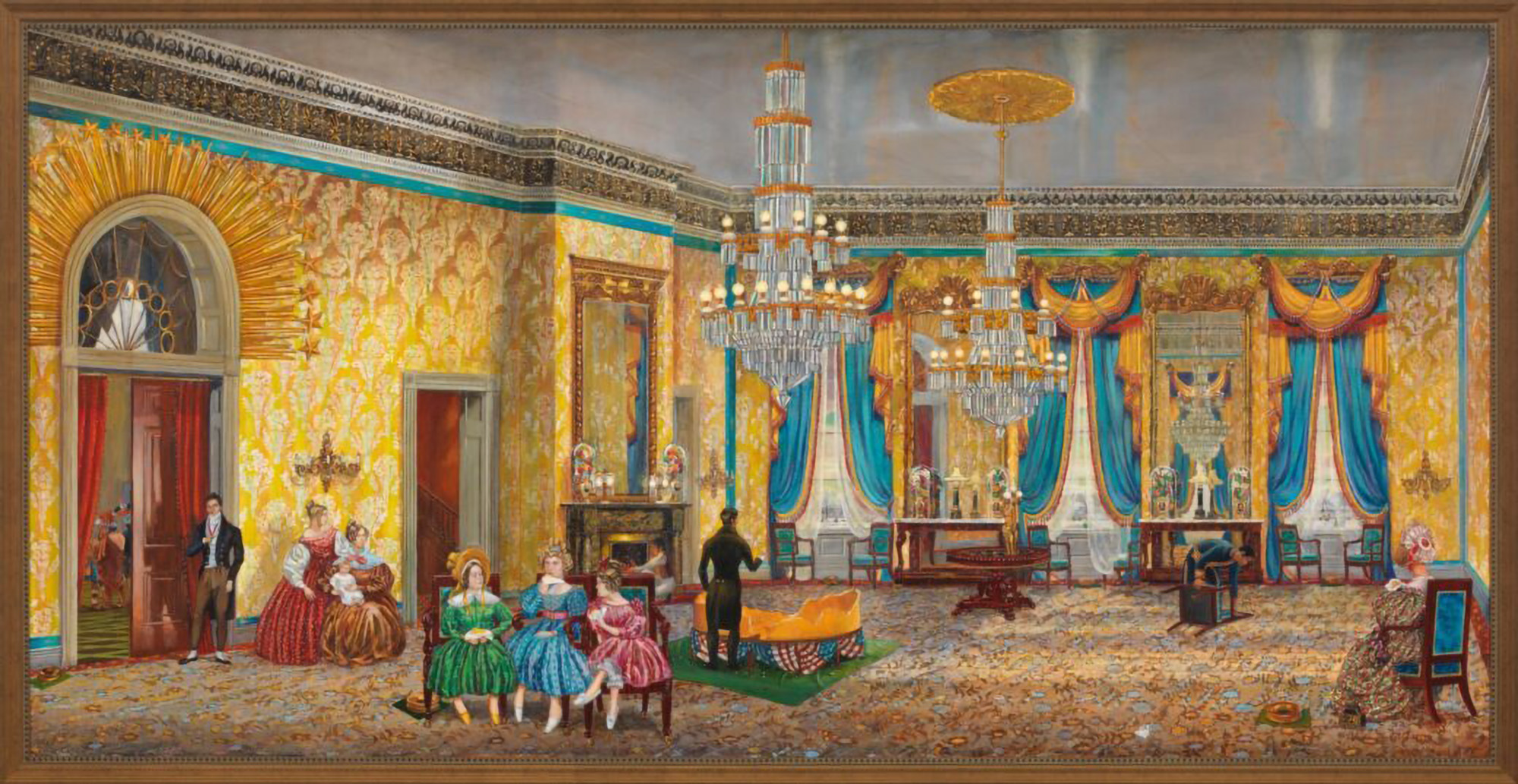
The final party of Jackson’s presidency was on February 22, 1837, in honor of George Washington’s birthday. As the party approached, the cheese was dragged from the White House lobby into the East Room. On the day of the party, Jackson declared open season on the cheese.
The 19th century journalist Benjamin Perley Poore described the carnage that ensued in his book Perley’s Reminiscences of Sixty Years in the National Metropolis. According to Poore, Washington’s cheese enthusiasts descended on the capitol, and, a matter of hours later, the cheese was no more: “The air was redolent with cheese, the carpet was slippery with cheese, and nothing else was talked about at Washington that day.”
How long can a cheese just sit there?
Perhaps the key takeaway here is that you can apparently just leave an enormous cheese sitting in the open air for two years and then feed it to the masses without causing a mass food poisoning outbreak. So what actually happens to an absurdly large cheese when it’s left to just…mature?
Brooklyn-based cheesemaker Caroline Hesse explains that cheese maturation involves a whole lot of chemical processes. “On a scientific level, you have lactose breaking down into lactic acid, [along with] fats and proteins breaking down.”
These processes play a key role in imparting flavor and richness to the cheese—and the longer a cheese sits, the further these processes are able to progress. This is why aged cheeses are generally stronger and more flavorful than their fresher, younger counterparts. But not all cheeses are equal. While relatively hard cheeses, like Jackson’s cheddar wheel, can be left to mature for months or years, Hesse says that if you left a soft cheese like brie sitting for that long, very bad things would happen. “Soft cheese will just kind of liquify, run everywhere, and create ammonia.”
Other Stories from our ‘That Time When’ Series
Ultimately, she explains, it’s moisture content that determines a cheese’s shelf life: the harder and drier the cheese, the longer it can sit unrefrigerated. In 2012, a Wisconsin cheesemaker discovered some cheddar that had sat forgotten at the back of his refrigerator for 40 years—and promptly offered to sell it to anyone brave enough to try it. One such individual, the proprietor of the market where the cheese was briefly on sale, described it as “barely edible.”
If cheddar can remain (barely) edible after 40 years, then it’s probably not surprising that a couple of years in the White House lobby presented no problem at all. But the 19th century fondness for big political cheeses does raise another question: Is there any limit on how big a cheese can be?
Can the biggest cheese be…bigger?
Today’s giant cheeses make Jackson’s wheel look like one of those little Laughing Cow wedges you get from the supermarket. The Guinness Book of World Records lists cheeses in several categories, but the largest by weight is a cheddar made in Canada in 1995, which weighed a whopping 57,518.5 pounds, or just over 26 metric tonnes. For comparison, the average family car weighs about 4,000 pounds, or two tons.
Can we go bigger? Hesse says that while one can theoretically just keep making larger and larger cheeses indefinitely, there are practical difficulties that start to manifest as cheeses get larger. The biggest one is how to squeeze out all the excess whey. “Eventually it gets to a point where there is a draining issue,” she says. “But if you’re making cheese that’s that big, I’m sure you also have a very large industrial press.”
And while the narrative arcs of the presidency and the humble cheesemaker have rarely intersected since the 19th century, the current incumbent has demonstrated that he’s not averse to receiving gifts. So if there’s a sudden shortage ofcheddar at the local shop, you read it here first: a colossal cheese might just be making its way to Washington.
In That Time When, Popular Science tells the weirdest, surprising, and little-known stories that shaped science, engineering, and innovation.