It’s the kind of “scale shock” that isn’t all that shocking. For those of us brave enough to step onto the scale the day after Thanksgiving or Christmas, you can sometimes see an increase of up to five to 10 pounds.
Sure, you might have filled up on appetizers and cocktails before even sitting down at the table, then had that extra helping of mashed potatoes…and then dug into that pumpkin pie with whipped cream. But even with all that, have you really gained that much weight overnight?
Probably not, says Dr. Jamie A. Cooper, the head of the Department of Kinesiology at the University of Georgia. Instead, it’s the slippery slope of sustained overeating that can lead to real weight gain.
“The risk for holiday weight gain isn’t usually associated with a single eating episode—it’s the culmination of several eating episodes that are different from what people would normally do,” Cooper tells Popular Science. “If a person overindulges at Thanksgiving dinner, but then gets right back on track with their typical eating and exercise routines, there’s probably not going to be a lot of damage done.”
The next day, however, brings its own challenges.
“There are leftovers,” she says.
So, what’s really behind the post-Thanksgiving scale jump?
The science behind the day-after weight spike
Water retention is a major contributor to the harsh verdicts delivered by countless bathroom scales on Black Friday, Cooper says. The high sodium content in a typical Thanksgiving spread can make your body hang onto extra fluid. And all those cozy carbs? They’re stored as glycogen, which binds to water, adding a few more temporary pounds.
Related Ask Us Anything Stories
“Another factor is simply that the volume of food can lead to increased intestinal bulk that will need to be processed by the body,” says Cooper.
Cooper didn’t rule out the possibility of genuine fat gain from an excessive Thanksgiving meal, but noted that there hasn’t been much research on the immediate aftermath of a big meal.
“It’s hard to tease these things out, which is why we tend to look at the patterns of eating rather than just the one meal,” she says. “If the scale is still showing a higher weight on Monday, that’s a possible indication that actual fat mass gain has occurred.”
How does real weight gain happen?
Cooper goes on to demystify the math behind fat mass gain, which is the kind that can stick around and cause trouble.
A pound of body fat contains about 3,500 calories that your body has stored away, Cooper says. In other words, you’d have to eat roughly 3,500 calories more than you burn to actually gain a pound of fat.
So one big holiday meal usually isn’t enough to instantly add a full pound. But a few days of celebration in a row can do it, Cooper says.
“If you look at that over the course of a four-day holiday weekend, that’s 900 excess calories daily,” she says. “When you start throwing in desserts and alcoholic beverages, it’s not all that difficult to get to that.”
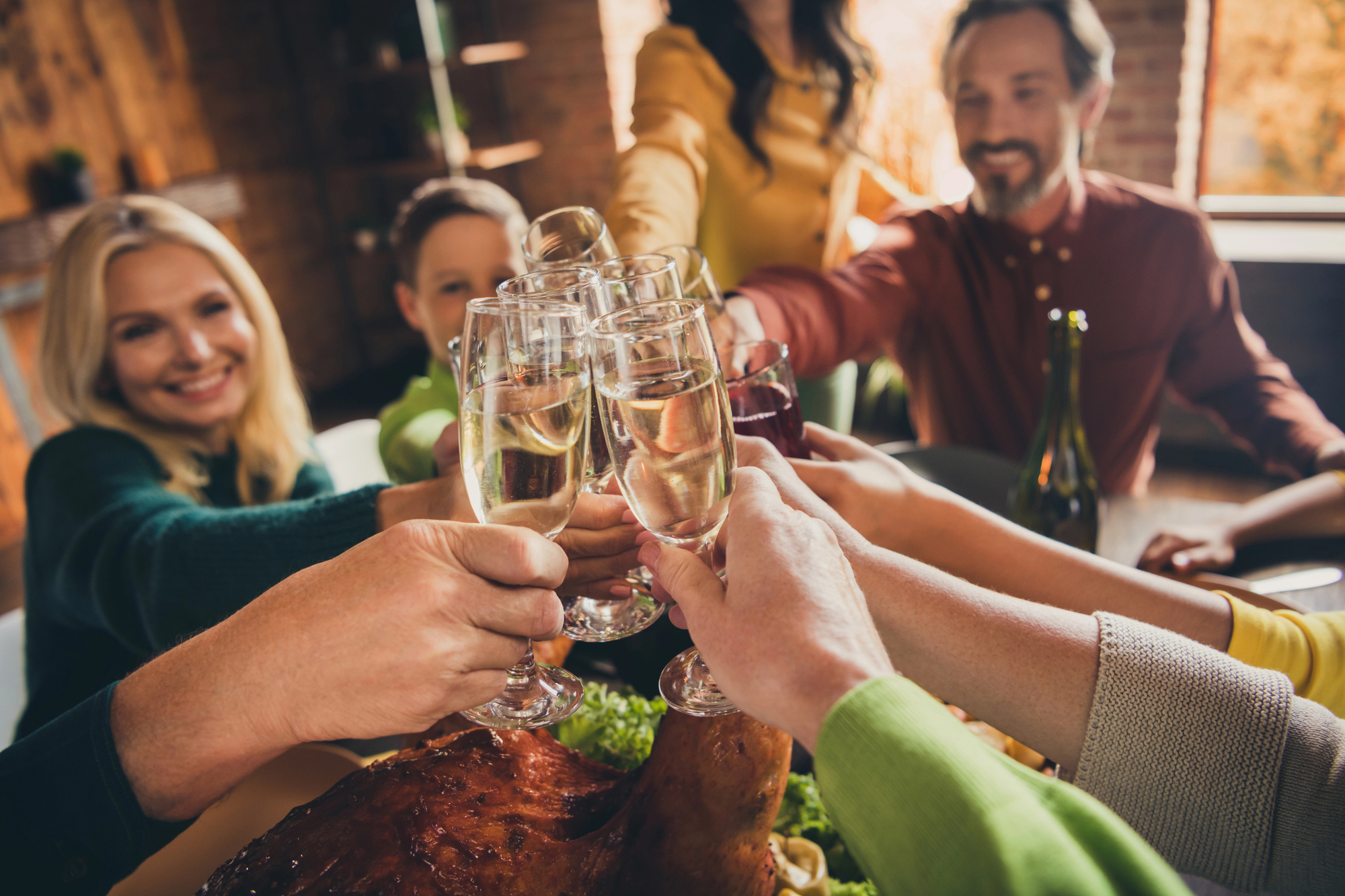
Research backs up how sustained indulgence can lead to weight gain. One study of college students found body weight rose by roughly a pound over Thanksgiving, likely because of days of celebratory eating, not one big dinner.
“Many people wouldn’t normally eat two pieces of pie on Friday, Saturday, and Sunday on a regular weekend,” Cooper says. “But if there are three pies left over, we might be more likely to do that.”
And it doesn’t always disappear quickly. In another study conducted by Cooper and colleagues, participants retained about 57 percent of their holiday weight gain the following spring, suggesting those extra calories can quietly settle in for the long haul.
Keeping it joyful
When it comes to reining in holiday dietary indulgence, Cooper urges balance—not guilt.
“It’s a joyful time. You’re hanging out with family and friends, and there’s a lot of yummy food,” says Cooper. “People don’t want to have to think about these things; they just want to enjoy themselves.”
Rather than stoic denial of holiday deliciousness, Cooper advises avoiding the slide into a month-long pattern of excess. She also supports small, informed tradeoffs—choosing lower-calorie pumpkin pie over more calorie-dense pecan pie, for example, or swapping out alcoholic drinks for water.
“People can make intentional decisions to limit the effects of holiday eating,” she says. “There are ways to limit the excess around these occasions without feeling like you have to completely miss out on the yumminess of the holidays.”
In Ask Us Anything, Popular Science answers your most outlandish, mind-burning questions, from the everyday things you’ve always wondered to the bizarre things you never thought to ask. Have something you’ve always wanted to know? Ask us.