What astronomers initially suspected to be a new exoplanet is actually a never-before-seen, head-on cosmic crash. As detailed in a study published today in the journal Science, researchers describe the aftermath of two separate collisions between two small, rocky cosmic objects called planetesimals. However, their findings were only made possible by some eagle eye imaging courtesy of the Hubble Space Telescope.
This celestial saga began almost 20 years ago. In 2008, astronomers detected an unexplained bright object located 25 light-years from Earth in the Piscis Austrinus constellation. Experts designated it as Fomalhaut b, but weren’t quite sure what “it” actually was. Initial analysis suggested that it could be a new exoplanet even larger than our own sun. At the same time, its surrounding, roiling cloud of debris hinted Fomalhaut b was an expanding dust formation.
“The system has one of the largest dust belts that we know of. That makes it an easy target to study,” explained Jason Wang, an astrophysicist at Northwestern University and study co-author.
After years of intermittent examinations, Wang’s team had the opportunity in 2023 to harness the Hubble Space Telescope’s powerful lenses at the mystery. But when Hubble trained its equipment on Fomalhaut b’s coordinates, it wasn’t there. Instead, the telescope flagged a bright spot of light in a slightly different, nearby location.
“We assumed the bright light was Fomalhaut b because that’s the known source in the system. But, upon carefully comparing our new images to past images, we realized it could not be the same source,” Wang said. “That was both exciting and caused us to scratch our heads.”
“This is certainly the first time I’ve ever seen a point of light appear out of nowhere in an exoplanetary system,” added University of California, Berkeley, astronomer and study co-author Paul Kalas. “It’s absent in all of our previous Hubble images.”
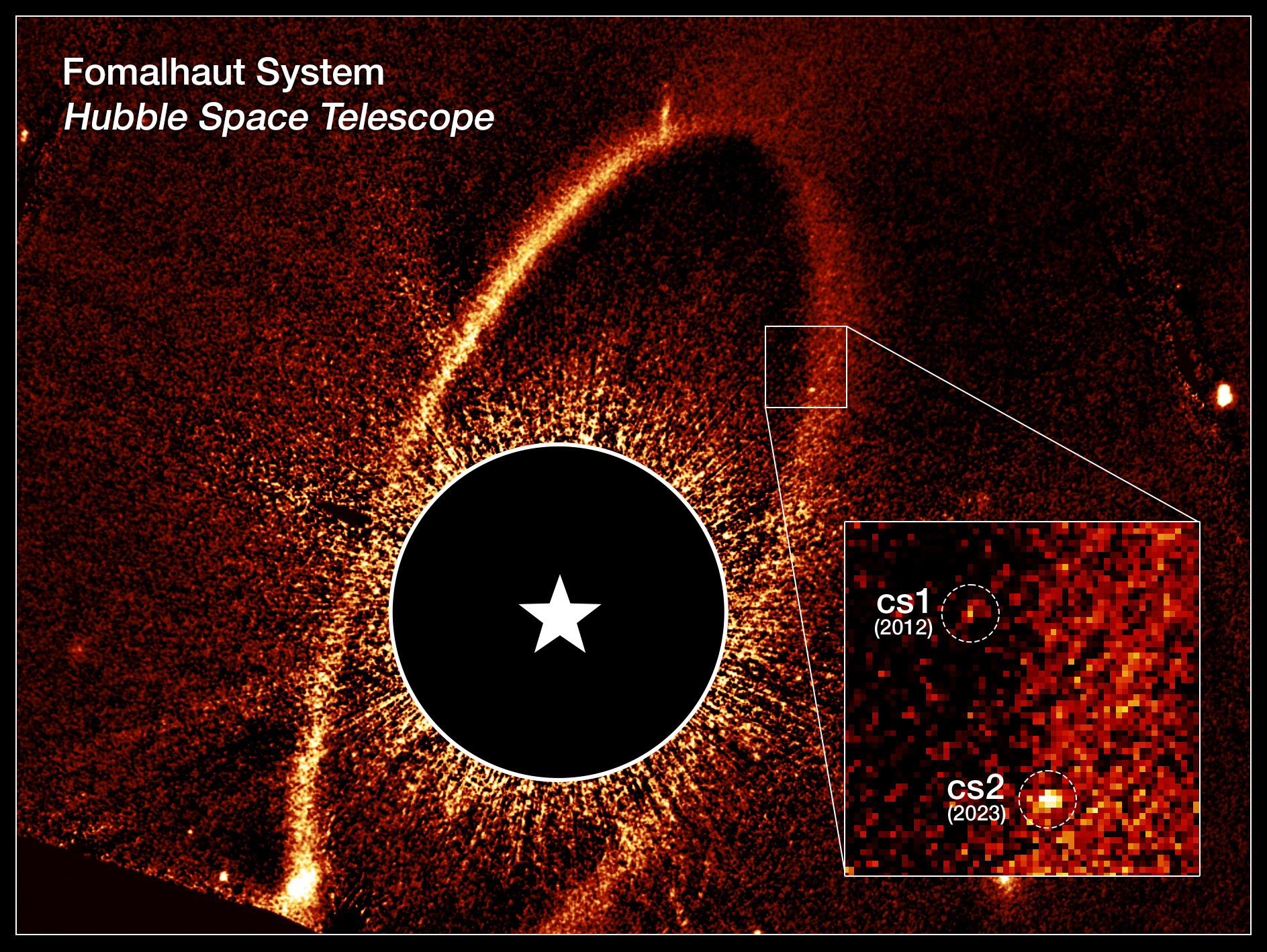
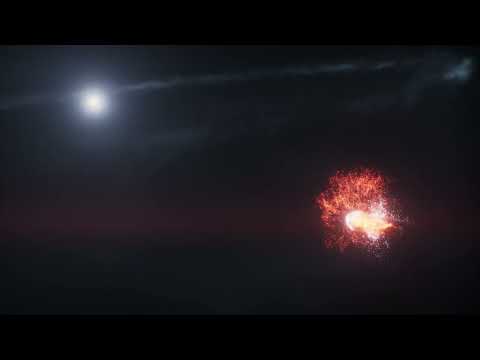
Further review now strongly indicates that the object—now classified as Fomalhaut cs1—was never an exoplanet. The more likely explanation is that first observations in 2008 showcased the early results of a spectacular crash involving smaller, rocky components of early planetary development called planetesimals. Hubble’s more recent imagery shows the dissipating remains of the smash encounter.
What’s more, Fomalhaut cs2 displays traits that are extremely reminiscent of Fomalhaut cs1, a subject also studied two decades ago. Previous theories proposed this type of collision should only occur in a region once every 100,000 years or so.However, researchers calculated a different estimate after examining the system.
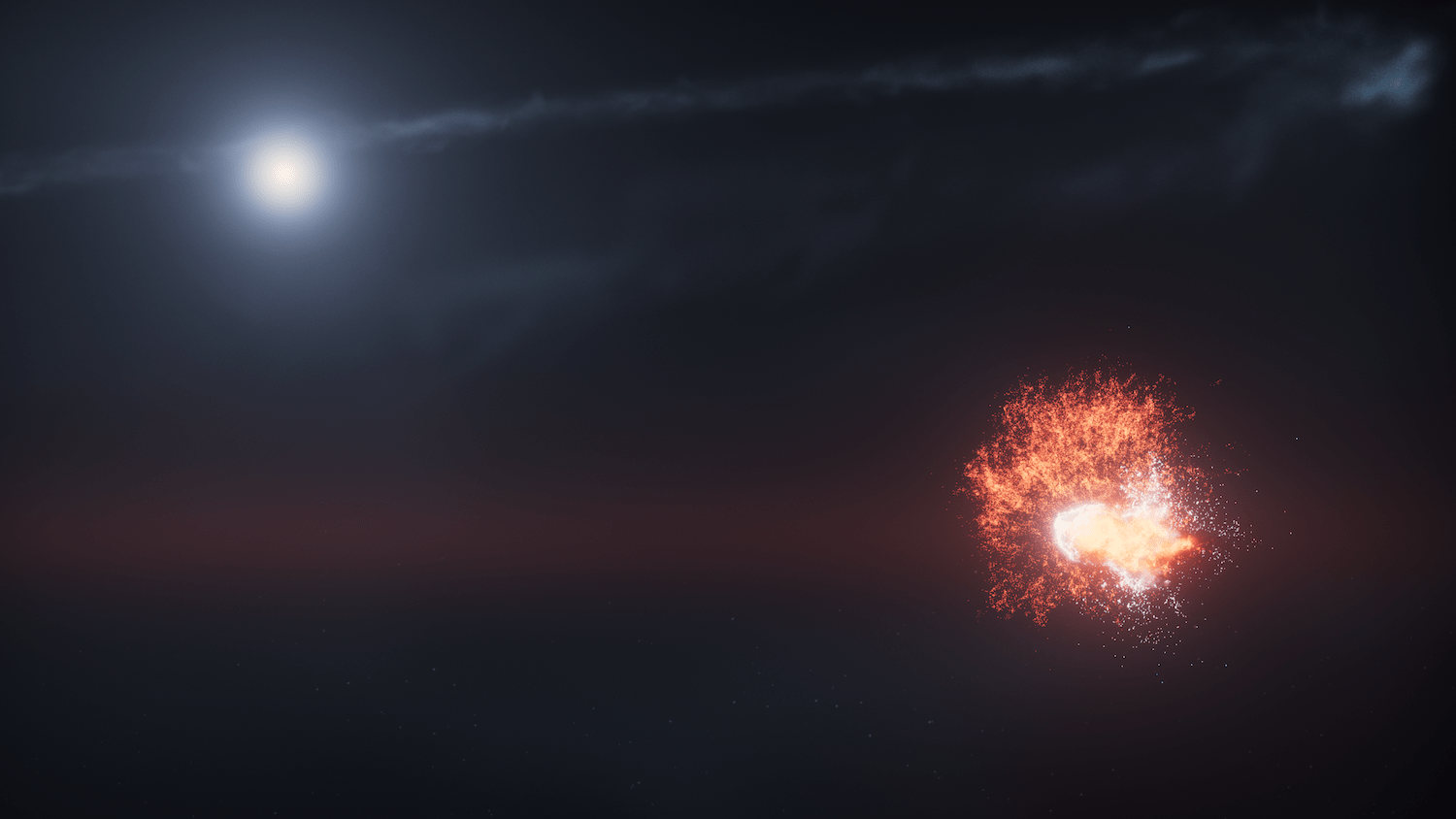
“Here, in 20 years, we’ve seen two,” said Kalas. “If you had a movie of the last 3,000 years, and it was sped up so that every year was a fraction of a second, imagine how many flashes you’d see over that time. Fomalhaut’s planetary system would be sparkling with these collisions.”
Although initially difficult to believe, four independent analyses of the data supported their findings: Fomalhault recently hosted two separate transient events involving planetesimals.
“This is the first time we’re seeing something like this,” added Wang.
With Fomalhaut’s collisions confirmed, astrophysicists can start utilizing the data to better inform planetary models, as well as more accurately identify potential exoplanets. According to Kalas, the multi-decade mystery also serves as a case study in the difficulties that come with searching the cosmos.
“Fomalhaut cs2 looks exactly like an extrasolar planet reflecting starlight,” he said. “What we learned from studying cs1 is that a large dust cloud can masquerade as a planet for many years. This is a cautionary note for future missions that aim to detect extrasolar planets in reflected light.”