“By definition, invasive species are harmful in some regard,” says Jacob Barney, a professor of invasive plant ecology at Virginia Tech University. So when we eat them, he adds, “we turn that harm into something positive.” Although just how positive an impact eating invasives has can vary.
Wherever human beings go, we introduce plants and animals from other places, both deliberately and accidentally. However, not all introduced species have the same impact on their new environments.
An introduced species is only considered invasive if it poses a threat to native species, for example by competing with them for limited resources. In the absence of natural predators, invasive populations may swell far beyond what their new environment can support. Fortunately for those concerned about the ecological impact of these interloping plants and animals, it just so happens that a lot of them are pretty tasty.
At the end of each semester, Barney challenges his students to bring dishes made with invasive ingredients to a class potluck. “I like to say it’s where we eat what we’ve been studying,” he says.
Last semester’s banquet included cookies made with prickly pear cactus fruit, invasive in many desert regions, and sausage made from feral hogs, which Barney describes as “delicious.” Students voted on the most creative and best-tasting entries. This time, the winner in both categories was a riff on spinach-and-artichoke dip, using invasive kudzu vine leaves in place of spinach.
Many invasives have culinary value
In some cases, invasive species were introduced because they’re tasty. Barney points to the Mediterranean fig tree, introduced to California for cultivation and now invasive there, as one example.
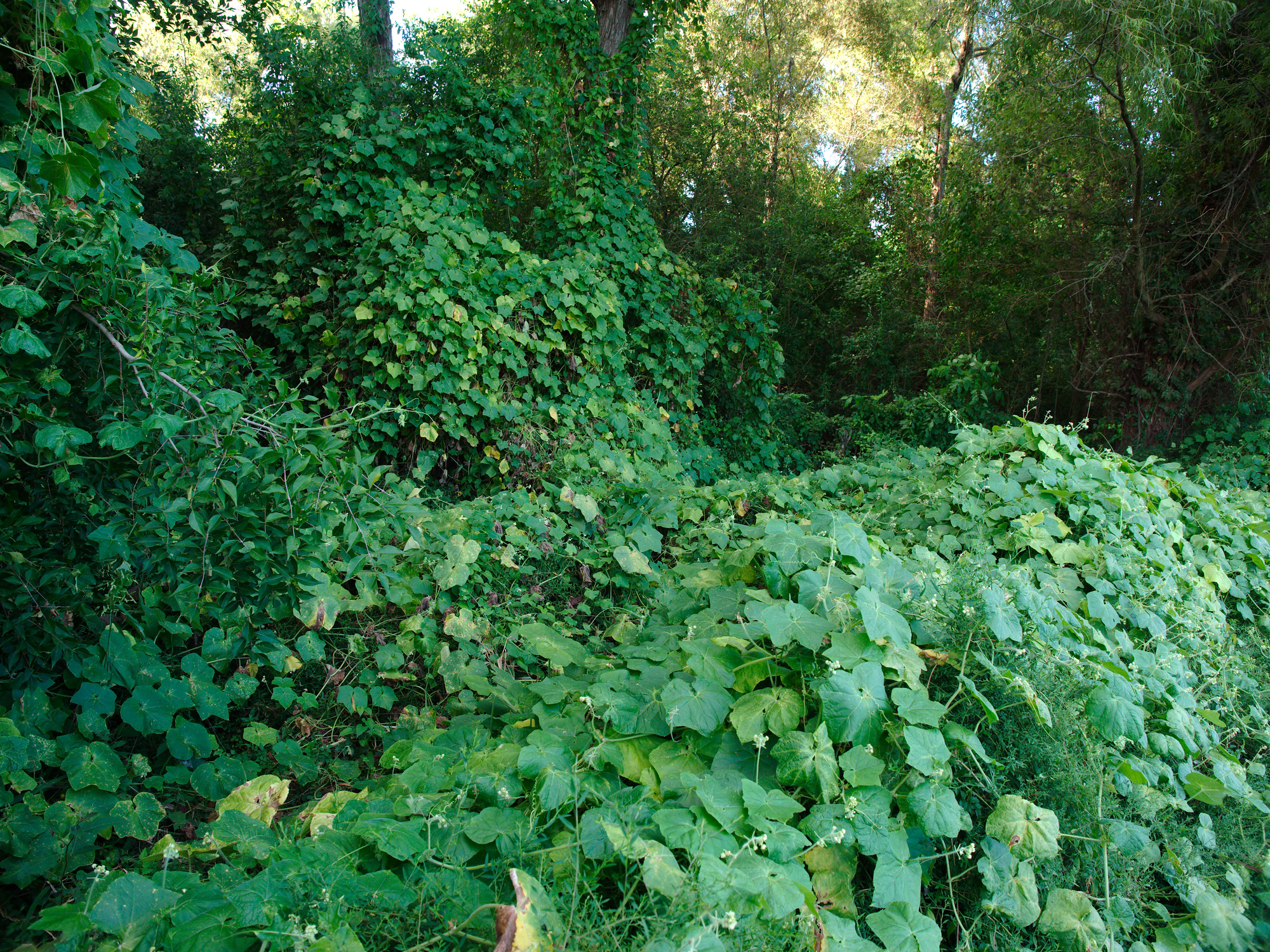
There are also many invasives that have a well-known culinary value in their place of origin, but were introduced for a different reason. Kudzu is one example. Introduced in the United States as an ornamental garden plant, it has since become known as the infamous “vine that ate the South” for its uncontrollable growth. But in its native Asia, kudzu’s leaves are eaten as a vegetable, and its potatoey roots provide starch for jellies such as Japanese kuzumochi.
Barney notes that in the Chesapeake Bay watershed, where the invasive blue catfish has done damage, there’s currently an effort to industrialize harvesting catfish for food. “That’s the kind of scale that I think can have a meaningful impact,” he says. The effects of a large-scale commercial food operation on an invasive species would be far greater than occasional foraging by individuals.
But such efforts are still relatively rare, and not all invasives are seen as a desirable food source, or even recognized as being edible. This has sometimes led environmentalists to get creative with marketing. In Illinois, invasive Asian carp meat has been sold under the name “copi” (for its copious numbers) since 2021, due to perceptions of carp as an inferior food fish.
In Florida, the Reef Environmental Education Foundation (REEF) has been hosting “Lionfish Derbies” since 2009, in which divers compete to see how many invasive lionfish they can spear. These events culminate in free lionfish tastings. According to REEF, “tastings give the public a chance to see how delicious lionfish are and encourage the consumption of lionfish in local restaurants. Derbies also draw media attention to the Atlantic lionfish invasion and help promote development of the commercial lionfish market.”
Eating invasives teaches you about local ecology
Does this mean that if we all start eating invasives, it will completely get rid of them? Not exactly. “For the general, curious forager, or somebody looking to try something different, the impact [of eating invasives] on the environment is probably small to negligible,” says Barney. However, he adds, this doesn’t mean that we shouldn’t eat invasives. We just shouldn’t think of eradicating them as being the sole reason to do so.
While large-scale harvesting of an invasive species for food, such as blue catfish in the Chesapeake, can make a difference, eating invasives is not going to totally remove them any more than other strategies. Total elimination of an invasive species tends to only happen in more isolated environments, such as on small islands. Invasive zebra mussels have been successfully removed from Lake Waco, a manmade reservoir in Texas, as of 2021, but remain a problem in major bodies of water like the Mississippi River. In most cases, invasives are here to stay, and removal efforts focus on population management, minimizing impact by keeping numbers down.
Related ‘Ask Us Anything’ Stories
Barney describes eating invasives as “a really nice entry point into understanding the species in your surroundings, and a different perspective on the role that they can play in our lives.” To eat invasive species, you have to first learn what species are invasive in your area and how to identify them. This means that eating invasives is a way of learning more about your environment and the relationships between the organisms that live there—including you.
How to find edible invasives
Commercial sale of edible invasives is often small-scale and localized. Once you know what invasives there are in your area, you can keep an eye out for them on restaurant menus and in local markets. But your best bet for sampling an invasive might be to forage it yourself (where permitted). Experts like “Forager Chef” Alan Bergo offer information on how to incorporate both native and invasive species collected from the wild into your diet.
Barney cautions beginning foragers that “anytime you’re harvesting something from the wild, identification is first and foremost.” He recommends resources like iNaturalist and its Seek app for species identification. Users of iNaturalist can also upload their species sightings to a collaborative global map. This serves as a valuable database for scientists like Barney who study the spread of invasives.
When asked his personal favorite invasive to eat, Barney recommends autumn olive. This silvery shrub, native to Asia, is a common invader of open grassland in the eastern United States. “It makes these really tasty fruits,” says Barney. Autumn olive’s tiny red berries are bitter when fresh, but their pulp can be processed with sugar into jams and sauces.
Eating invasives is not so much about eradication as it is about awareness. “Once you have your eyes exposed to the number of invasive plants and animals in the environment there, you can’t not see them,” says Barney. We may never be able to eat every single invasive out of existence. But eating some of them can make us see our surroundings in a whole new way.
In Ask Us Anything, Popular Science answers your most outlandish, mind-burning questions, from the everyday things you’ve always wondered to the bizarre things you never thought to ask. Have something you’ve always wanted to know? Ask us.

2025 PopSci Best of What’s New