In Hans Christian Andersen’s classic fairytale, “The Princess and the Pea,” a prince tests whether a young woman is, in fact, a princess. In order to authenticate her nobility, his mother (the queen) places a single pea at the bottom of the woman’s bed, beneath 20 mattresses and 20 quilts. If the woman is sensitive to the pea, she must have royal blood—obviously. Although she falls asleep easily atop the towering, the woman spends the entire night tossing and turning because the bed is so uncomfortable. Later, the queen confirms it was the pea that made her sleep so unbearable. But if you were to ask a sleep doctor today, it may have had more to do with the princess’s sleeping position.
It’s no secret that your sleeping position can significantly affect your sleep quality. But according to science, which sleeping position is best?
In order to determine whether we should be snoozing on our backs or curling up on our sides to achieve maximum health benefits (and a good night’s rest), Popular Science turned to Dr. John Saito, a representative for the American Academy of Sleep Medicine. Apparently, the answer isn’t so clear-cut.
A good sleep position begins with easy breathing
“Everyone has an idea of what a good sleep position may be,” says Saito, “whether it’s sleeping on your left side, ride side, back, belly, or even upside down. But it all depends on the context.”
For example, say you’re lying on your back and have a good support pillow that keeps your spine and your neck in a neutral position. This, says Saito, allows your airway to remain unobstructed and you to breathe easily. That’s a good thing.
However, if you have sleep apnea—a condition in which your breathing stops and starts throughout sleep, typically resulting from your throat muscles becoming too relaxed and blocking a body’s upper airway—sleeping on your back can be detrimental to your health.
“If the tongue falls to the back of your throat when you’re lying on your back, that’s bad,” says Saito. For babies, most doctors recommend putting them to sleep on their backs to reduce the risk of sudden infant death syndrome (SIDS), an unexplained death that usually occurs during sleep.
Related ‘Ask Us Anything’ Stories
Good news for side sleepers
For adults, “If you’re lying on your right side, it might be better for blood flow,” says Saito, as well as lower pressure on your heart. This is because your mediastinum, a flexible compartment located between the lungs, helps hold your heart in place.
“If you’re lying on your left side, it may actually be better for clearing the waste product in our brain,” he says. This is called the glymphatic system, a brain’s specialized waste clearance network that washes away harmful metabolic byproducts, including proteins linked to Alzheimer’s disease, while we sleep.
There’s also a difference between sleeping in a fetal or curled position, and sprawling out straight. Sleeping on either side with your body relatively linear helps to align your spine, while curling up on your side is generally good for easing lower back pain. However, being too curled up like a baby can compress your diaphragm and chest, and in turn restrict breathing.
Finding the best sleeping position for you
Regardless of what science shows, certain people will have certain preferences when it comes to sleeping positions, says Saito, and for good reason. For instance, “ask someone who’s dealing with back pain to then sleep on their back and they’re going to curse you,” he says, “because even though they’re breathing better, their bones and joints are hurting terribly.”
So instead of a specific sleeping position, Saito says to consider the ABCs of respiratory therapy: airway, breathing, and circulation. “If you can’t breathe because you have sleep apnea or you have allergies and a stuffy nose, you want to find the best position that keeps your airway open,” he says.
What if you move around, sleeping in multiple positions through the night?
According to Dr. Saito, “There’s nobody that sleeps like a log and doesn’t move. You may start off in one position to be comfortable, but over the night you shift.” However, he says, there’s a difference between repositioning yourself throughout the night, and moving a lot because you can’t find a comfortable sleeping position. “Just like in anything, a little bit is OK,” he says, “but too much means you’re outside of the spectrum of normal.”
People who have trouble sleeping tend to move excessively. But there are ways to practice sleeping in better positions. If you’re typically a side sleeper, try placing a pillow between your knees to help better align your head, neck, and hips. This neutral posture can not only make breathing easier, but it can also result in deeper, more restorative sleep.
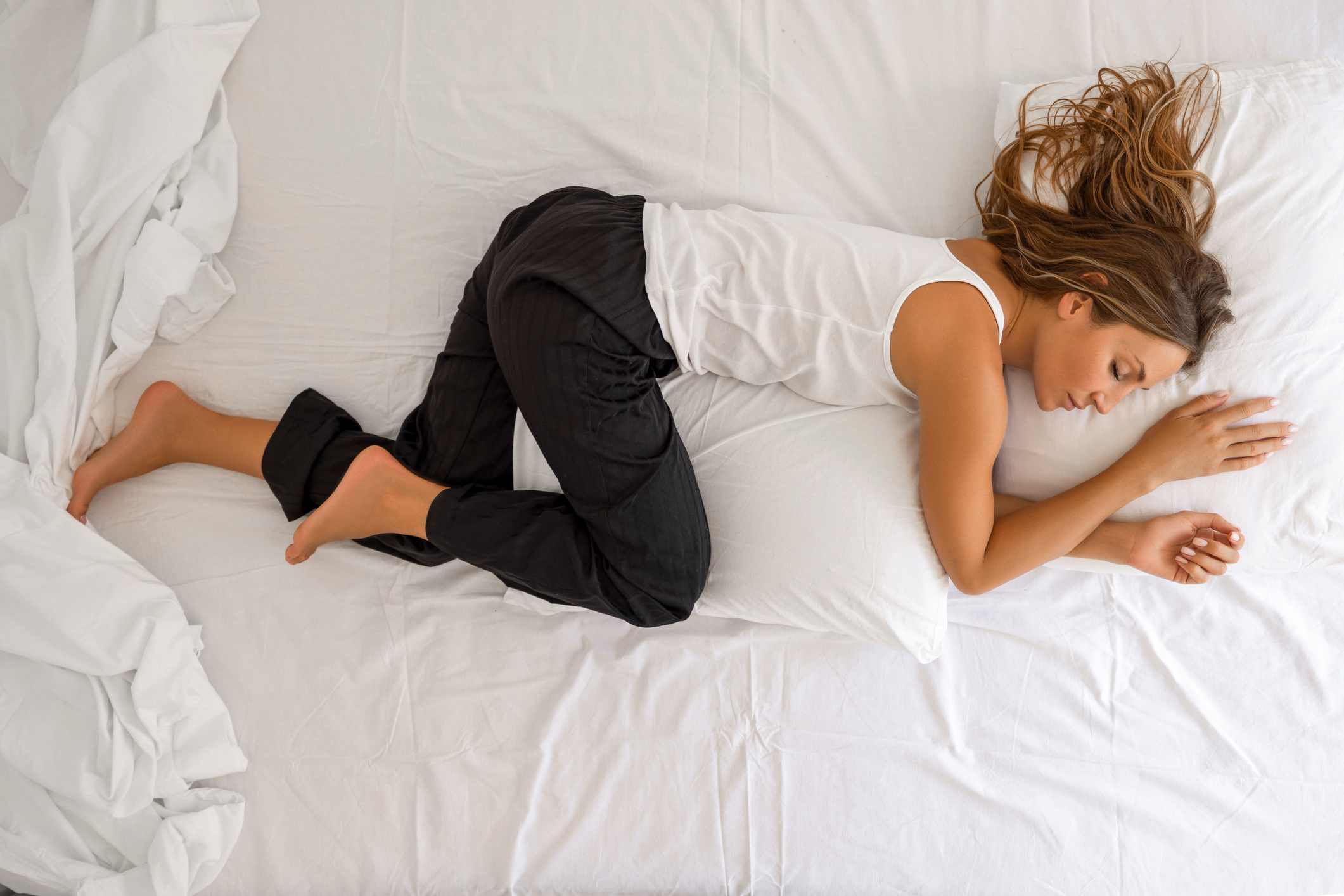
If you’re traditionally a back sleeper, place a pillow under your knees. Is sleeping on your stomach more your thing? Try placing a thin pillow under your hips. Choosing a mattress that adheres to the natural curve of your spine is also a key element of snoozing through the night.
In the end, “There’s no one best sleeping position,” says Saito. In reality, it can depend on a myriad of factors, from whether you’re pregnant and suffering from bad back pain to battling sleep apnea and being a chronic snorer.
Your ultimate goal is to find a comfortable, unobtrusive sleeping position that allows you to get a good night’s sleep.
Ultimately, whatever sleep position you find comfiest is going to be the best one for you. This is because it’s what’s going to give you the most rest, which, in turn, will also keep you healthiest.
In Ask Us Anything, Popular Science answers your most outlandish, mind-burning questions, from the everyday things you’ve always wondered to the bizarre things you never thought to ask. Have something you’ve always wanted to know? Ask us.

2025 PopSci Best of What’s New